Pages

Monday, August 31, 2015

96 BOOKS WITH NUMBERS IN THE TITLE


When my son Luke started reading in earnest—that is, when he found that he had made his way through enough contemporary fantasy novels to fill the libraries of Rivendell and Hogwarts—I began to suggest some older classics.

He had already read the three books in the Lord of the Rings trilogy, including The Two Towers, which was his favorite one. How about Jules Verne, I said. Around the World in Eighty Days or Twenty Thousand Leagues Under the Sea. Then I got him hooked on Sherlock Holmes, starting with Arthur Conan Doyle’s The Sign of Four. For good measure, I led him to Agatha Christie’s classic And Then There Were None.

See a pattern? We at the Why Not100 obviously treasure the written word, but there sure are a lot of classics with numbers in the title, whether it’s 1984, Seven Years in Tibet, or North Dallas Forty. Hence, the following list.

Only once, as you’ll see, do we reference Janet Evanovich, who has written twenty numbered Stephanie Plum mysteries—from One for the Money, Two for the Dough, and Three to Get Deadly to Explosive Eighteen, Notorious Nineteen, and Takedown Twenty.

You may also notice, when you get to number 50, that a certain erotic novel didn’t make the cut.

1. One Flew Over the Cuckoos Nest (Ken Kesey)
2. A Tale of Two Cities (Charles Dickens)
3. The Three Musketeers (Alexandre Dumas)
4. The Sign of the Four (Arthur Conan Doyle)

Monday, August 24, 2015

40 INITIALIZED AUTHORS AND THEIR REAL NAMES


Ever consider that most of us don’t necessarily know the first name of the authors of such classics as The Hobbit, The Chronicles of Narnia, The Wizard of Oz, Curious George, Mary Poppins, Charlotte’s Web, and Winnie the Pooh? Or The Catcher in the Rye? Or The War of the Worlds? Or, for that matter, The Sixth Sense?

Oh, and the Harry Potter series, too. Joanne Rowling was asked by her publisher to adopt a more masculine pen name. So she borrowed her grandmother’s name (Kathleen) and became forever famous as J.K. Rowling. Much the same process happened with Susan Eloise (better known as S.E.) Hinton, author of The Outsiders.

So let’s take a tour of initials and explore the real names behind some literary icons.

1. J.R.R. Tolkien (John Ronald Reuel)
2. W.E.B. Du Bois (William Edward Burghardt)
3. J.K. Rowling (Joanne Kathleen)
4. C.S. Lewis (Clive Staples)
5. E.B. White (Elwyn Brooks)

Sunday, August 16, 2015

33 SUPER-SHORT BOOK TITLES


I just finished reading a really unusual book called “S.” It was conceived by J.J. Abrams, the brilliant guy behind the TV series “Lost,” which I absolutely loved until I absolutely hated it. (I felt like it was equivalent to reading a 3,000-page Sherlock Holmes mystery in which none of the clues actually wound up mattering because it was all a morphine-fueled excursion into another dimension). Abrams is also the guy who was handed the keys to the modern film versions of Star Trek and Star Wars and Mission Impossible. Brilliance begets good fortune—and a certain pop culture responsibility.

But about the book… “S” is an idea that would have been immediately discarded as far too expensive and outside-the-box if it had been proposed by just about anyone less creatively successful. As Abrams tells it, he was at LAX more than a decade ago, when he came across an abandoned book signed by a mysterious woman named Janet. It sparked an idea that was finally realized when he recruited novelist Doug Dorst to write up a tale (two tales, actually) and Mulholland Books to publish it.

The tagline: One book. Two readers. A world of mystery, menace and desire.

A young woman picks up a book left behind by a stranger who, as evidenced by his notes written in the margins, is entranced by the story (a novel called Ship of Theseus) and the enigmatic writer (a secretive and mysterious fellow called V.M. Straka). The readers—a college senior named Jennifer and a disgraced grad student named Eric—eventually begin to write to each other on the pages of the book. So it is essentially a double-story-intertwined. One is a mysterious sort of adventure tale, the other a beguiling sort of love story in the margins. What a cool idea.

It is basically two books in one, and “S” is the title of the meta-concept. Thus it is a long read with a short title. Add here’s where I finally get to the point of this post—it’s not even the first book called “S.” John Updike wrote one. And several authors wrote a collaborative novel of the same name. And Thomas Pynchon wrote “V.” Andy Warhol wrote “A.”

Here are 33 of the shortest book titles you’ll ever come across—along with a very short synopsis of each:

Sunday, August 9, 2015

38 TOWNS THAT CELEBRATE CLASSIC LITERATURE


August 9 is National Book Lovers Day. So I’m going to explore that in a literal sense.

There used to be a couple of communities in Florida, both of them settled sometime in the 1850s. One had a few general stores and some other businesses. The other boasted, at the very least, a post office. The towns were only about two miles apart, each one’s destiny certainly intertwined with the other’s. But today both are no more. They’re dead.

Their names? Romeo and Juliette.

Okay, so the spelling of the latter is a bit off. But c’mon, doesn’t that give you ghost town goosebumps?

Then again, there are plenty of Shakespearean places that you can visit during a cross-country excursion. We can start with a place called, well, Shakespeare, located in southwestern New Mexico, just south of the city of Lordsburg. That one’s a ghost town, too—much ado about nothing, one might say. But Shakespeare, New Mexico, actually offers occasional tours. And, in perhaps the ultimate anachronism, it has a website (shakespeareghosttown.com).

Want to further immortalize the Immortal Bard in the form of an epic road trip? Try this somewhat manageable itinerary:

1. Bard (California)
2. Romeo (Colorado)
3. Shakespeare (New Mexico)

Thursday, July 30, 2015

86 HARRY POTTER INCANTATIONS


Happy birthday, J.K. Rowling. And happy birthday, Harry Potter, too. July 31 is the big day.

Here at the Why Not 100, we have our own favorite wizard. It’s Gandalf the Grey. And our favorite boy who suddenly steps into a world of mystery and adventure? That would be Milo from The Phantom Tollbooth. But we can’t deny that Harry Potter is a likeable combination of both, and one of the most compelling aspects of J.K. Rowling’s series is the gradual revelation of the extent of his powers and the possibilities for wizardry.

The Harry Potter books and films contain scores of spells and charms. Some are merely mentioned, and others are cast nonverbally, but at least 86 actual incantations are revealed. So here they are. Use them at your peril:

1. Accio (summons an object to the caster)

2. Aguamenti (produces a jet of water from the caster’s charm)

3. Alohomora (open or unlocks doors)

Thursday, July 23, 2015

23 BEST BOOKS ABOUT 23 SPORTS


I often give a talk to educators that I call “Hemingway was a Sportswriter.” It’s mostly about how teachers can utilize sports as a means of generating enthusiasm for reading and writing among reluctant readers and writers. But the talk also might have been titled “In Defense of Sports as Literature.”

I talk about how Ernest Hemingway patterned himself after famous early 20th-century sportswriter Ring Lardner. And Hemingway wrote about sports—skiing, jai-alai, big game hunting—for the rest of his life. Death in the Afternoon was about bullfighting. The Old Man and the Sea, which won him a Pulitzer Prize, was a simple story about a fisherman battling a fish. Hemingway tended to use sports as a metaphor, and he found profundity in the action, the detail, the things other writers might have missed. He found beauty in the precision of the hunt, grace in the movement of the matador, a sort of ballet in the struggle between a fisherman and a marlin.

Books about sports can serve as enlightenment disguised as entertainment. Sometimes it’s because a game or a season or a sports can serve as the perfect structure for a riveting narrative. And sometimes it’s because athletes or events can represent agents of change. When you read a biography of Jackie Robinson or Joe Louis or Bill Russell, you’re really reading a racial history of America. Arthur Ashe’s brilliant and beautiful autobiography, Days of Grace, is about a tennis player, sure. But it’s really about race and AIDS and privacy and death and love.

It is no wonder that sports tends to draw literary luminaries. Damon Runyan and James Michener started their careers as sportswriters. John Grisham and Stephen King have each written a few books about sports—long after reaching the point where they could write about anything they want. William Faulkner wrote for Sports Illustrated. So did Robert Frost and John Steinbeck.

So sports—which was so long derided as the Toy Department of newspapers—has been the setting for many a literary masterpiece. Sometimes really serious stuff. And sometimes not. Some fiction. Some nonfiction. All brilliant. But I’m here to rank the best of the best—with only one rule: One book per sport.

Thursday, July 16, 2015

16 DEGREES OF SEPARATION—FROM HOMER TO HARRY POTTER


They say everything in literature is derivative, each creation influenced by a previous one. Perhaps, but there’s plenty of imagination still to be tapped. Most of the good stuff happens late at night, when everyone’s asleep and all the ideas are out there for the taking. That’s why we at Why Not Books aim to create nonfiction that tells untold stories from unique angles, along with clever fiction that doesn’t necessarily adhere to the trend or style of the moment. We pair stories with charities, publicizing the non-profits and donating a portion of the proceeds. We try to think outside the box.

Still… maybe everything really is derivative in one way or another. Consider the following, which shows that you easily can travel from Homer to Harry Potter in 16 steps:

1. Circa 800 B.C., Homer told the tale of the Trojan War in the form of The Iliad.

2. In a 14th-century poem set against a backdrop of that very siege of Troy, Geoffrey Chaucer retold in Middle English the tragic story of lovers “Troilus and Criseyde.” Achilles and Hector made appearances, too.

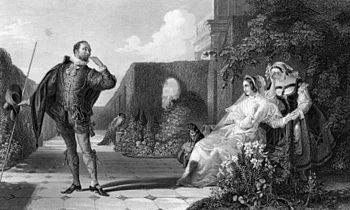
3. About 225 years later, based in part on Chaucer’s work, William Shakespeare penned Troilus and Cressida, a blacker version of the original. During the writing, the Bard’s Twelfth Night was first performed.


4. More than three centuries after Shakespeare’s day, Agatha Christie published Sad Cypress, the first Hercule Poirot courtroom drama, which takes its title from a song from Act II, Scene IV of Twelfth Night:

Come away, come away, death,
And in a sad cypress let me be laid;
Fly away, fly away breath;
I am slain by a fair cruel maid.

5. According to Christie in The Big Four, the fictional Poirot was born in the very real town of Spa, Belgium.

6. A violinist, Georges Krins, was also born in Spa, in 1889. Twenty-three years later, he boarded the RMS Titanic for its maiden voyage and gained immortality as one of the musicians who played while passengers boarded life rafts. Krins didn’t survive.

7. Novelist Theodore Dreiser, then 40, planned to return from a European vacation aboard Titanic, but his publisher persuaded him to opt for a less expensive ship. A year later, in his memoir A Traveler at Forty, he wrote, “To think of a ship as immense as the Titanic, new and bright, sinking in endless fathoms of water. And the two thousand passengers routed like rats from their berths only to float helplessly in miles of water, praying and crying!”

8. Earlier in his career, as a young newspaper reporter, Dreiser wrote an article about Nathaniel Hawthorne, who published The House of the Seven Gables in 1851.

9. The House of the Seven Gables was adapted for film 89 years after its publication. One of the stars of the movie: Vincent Price.


10. A quarter century later, Price made a guest appearance on a television show—Get Smart, created by Mel Brooks.

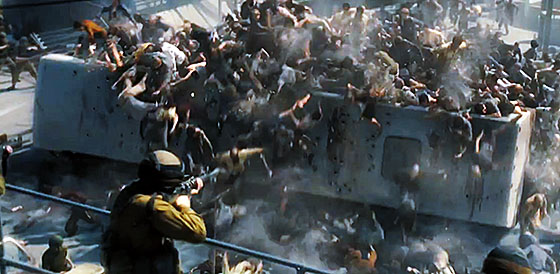
11. Mel’s son, Max Brooks, became an author and screenwriter, his most successful book being the epic tale of a zombie apocalypse: World War Z.


12. Brad Pitt’s production company, Plan B Entertainment, produced the film version of World War Z, as well as Charlie and the Chocolate Factory, starring Johnny Depp.

13. Depp played Hunter S. Thompson in the movie version of Fear and Loathing in Las Vegas.


14. Thompson was a Beat Generation pal of poet Allen Ginsberg.

15. Ginsberg was the focus of a 2013 biopic called Killing Your Darlings, starring Daniel Radcliffe as Ginsberg.


16. A dozen years earlier, Radcliffe skyrocketed to fame by playing a certain wizard by the name of… Harry Potter.