Pages

Wednesday, July 9, 2014

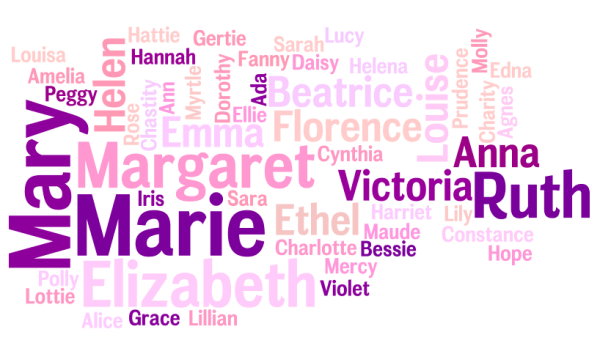
68 BOOKS FOR THE MOST POPULAR GIRLS’ NAMES


My sons, Luke and Jesse, were always prolific readers, and two picture books in particular captured their fancy. For Jesse, it was Jesse Bear, What Will You Wear? by Nancy White Carlstrom and Bruce Degen. For Luke, it was Luke's Way of Looking at Things by Nadia Wheatley and Matt Ottley. It's the story of a kid whose art teachers and peers don't have the imagination he has. So he discovers his own world filled with colorful and crazy pieces of art, which changes everything for him. 

Well, Jesse’s now a clotheshorse. And Luke, the one who saw his name in a book about a child who embraces his imagination? He’s the published author of two fantasy novels -- Dragon Valley and Griffin Blade and the Bronze Finger.

Maybe every child deserves a book title, a lead character of their own. With the publication of our picture book Francis and Eddie in 2013, we at Why Not Books tried to help the cause, Any four-year-old Francises out there? Any eight-year-old Eddies? Yeah, not so much.

Well, I found another way to help—by simply locating the top baby names of 2013 (according to the half a million parents who shared the information with BabyCenter.com) and finding at least one book for almost every one of them.

I focused on picture books specifically. That means no Charlotte’s Web, no Amelia Bedelia, and no Sarah, Plain and Tall. And, of course, personalized book series don’t count either. Sure, I cheated a bit by using titles like Hello, Brooklyn and Queen Victoria’s Christmas. And a few remain elusive—names that desperately need to be immortalized by somebody in the title of a picture book. Keira, anyone? Aaliyah? Aubrey? Adalyn? Alaina? How about Kennedy and Reagan? Or girls named Harper and Charlie?

Still, I found a whole lotta books. So what follows are 68 picture books for 68 of the most popular girls’ names today. Gift-givers, you’re welcome.

1.     Sophia—Princess Sophia and the Frog (Suzy Liebermann)
2.     Emma—Emma Dilemma (Kristine O’Connell George)
3.     Olivia—Olivia (Ian Falconer)
4.     Isabella—My Name is Not Isabella (Jennifer Fosberry)
5.     Mia—Mia’s Quest for Courage (Karen Yadid)
6.     Ava—Ava’s Poppy (Marcus Pfister)
7.     Lily—Lulu Lily Gets Smart (Sally Huss)
8.     Zoe—Zoe’s Hats (Sharon Lane Holm)
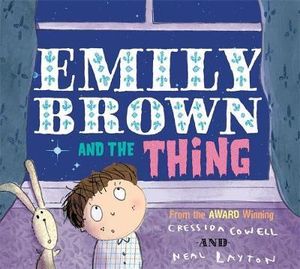
9.     Emily—Emily Brown and The Thing (Cressida Cowell)


10.  Chloe—Chloe, Instead (Micah Player)
11.  Layla—Layla’s Head Scarf (Miriam Cohen)
12.  Madison—Madison and the Two Wheeler (Vanita Braver)
13.  Madelyn—Madeline (Ludwig Bemelmans)
14.  Abigail—Abigail and Her Pet Zombie (Marie F. Crow)
15.  Charlotte—Charlotte’s Web (E.B. White)
16.  Amelia—Because Amelia Smiled (David Ezra Stein)
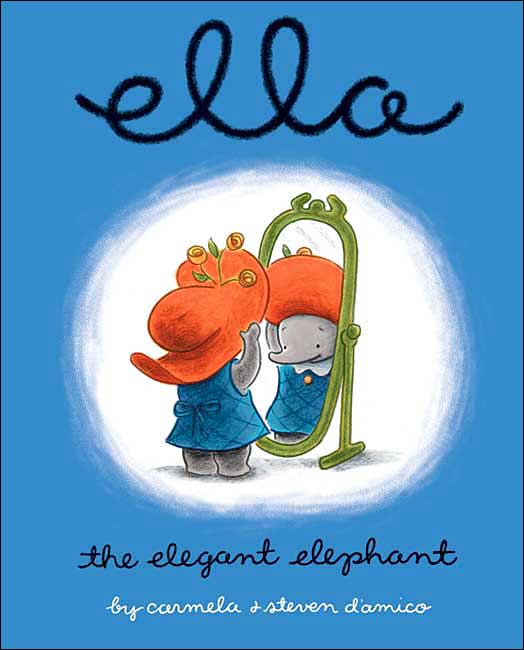
17.  Ella—Ella the Elegant Elephant (Carmela and Steven D’amico)


18.  Kaylee—Kaylee the Caterpillar in the Adventure of Life (Peggy Hunt)
19.  Avery—Avery and Cousin Ella’s Adventure (Frederic and Sonia Mendelsohn)
20.  Hailey—Hailey’s Halloween (Lisa Bullard)
21.  Hannah—Hannah on the Farm (Marjan Van Zeyl)
22.  Addison—Holly and Addison’s Adventures at Doggie Daycare (Betsy Manchester)
23.  Riley—The Short and Incredibly Happy Life of Riley (Colin Thompson)
24.  Aria—Aria the World Traveler (Anna Kim)
25.  Arianna—Arianna and the Strawberry Tea (Maria Fasal Faulconer)
26.  Mackenzie—Mackenzie’s Gift (Cari Poock)
27.  Lila—What Lila Loves (Bronwen Scarffe)


28.  Evelyn—That Evelyn Margaret! (Christina K. Hanrahan)
29.  Grace—Grace for President (Kelly S. DiPucchio)
30.  Brooklyn—Hello, Brooklyn (Martha Day Zschock)
31.  Ellie—Ellie’s Bad Hair Day (Jerome Keane)
32.  Anna—Anna’s Table (Eve Bunting)
33.  Kaitlyn—I’m Kaitlyn! (Crystal Bowman)
34.  Isabelle—My Friend Isabelle (Eliza Woloson)
35.  Sophie—Sophie’s Squash (Pat Zietlow Miller)
36.  Scarlett—The Bravest Cat: The True Story of Scarlett (Laura Driscoll)
37.  Natalie—Natalie & Naughtily (Vincent X. Kirsch)
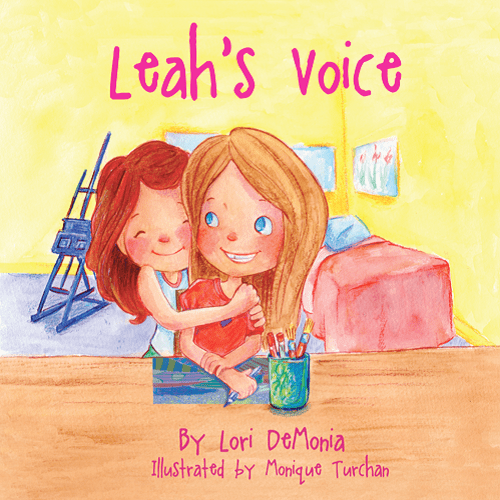
38.  Leah—Leah’s Voice (Lori DeMonia)


39.  Sarah—Thank You, Sarah: The Woman Who Saved Thanksgiving (Laurie Halse Anderson)
40.  Nora—Nora’s Ark (Eileen Spinelli)
41.  Mila—Maks and Mila on a Special Journey (Merel Bakker)
42.  Elizabeth—My Name is Elizabeth (Annika Dunklee)
43.  Lillian—Princess Lillian & the Creature (Erica de Muir)
44.  Kylie—Kylie’s Song (Patty Sheehan)
45.  Audrey—Audrey Bunny (Angie Smith)
46.  Lucy—Lucy Goosey (Margaret Wild)
47.  Maya—Maya and the Turtle (John C. Stickler)
48.  Annabelle—Annabelle’s Wish (Susan Korman)


49.  Makayla—Makayla Cares About Others (Virginia Kroll)
50.  Gabriella—Gabriella’s Song (Candace Fleming)
51.  Elena—Elena’s Serenade (Campbell Geeslin)
52.  Victoria—Queen Victoria’s Christmas (Jackie French)
53.  Claire—Ollie and Claire (Tiffany Strelitz Haber)
54.  Savannah—Savannah’s Swim Lessons (Pamela Baker)
55.  Peyton—Peyton Penguin Prefers Peas (Tammy Fitzherbert)
56.  Maria—Maria Had a Little Llama (Angela Dominguez)
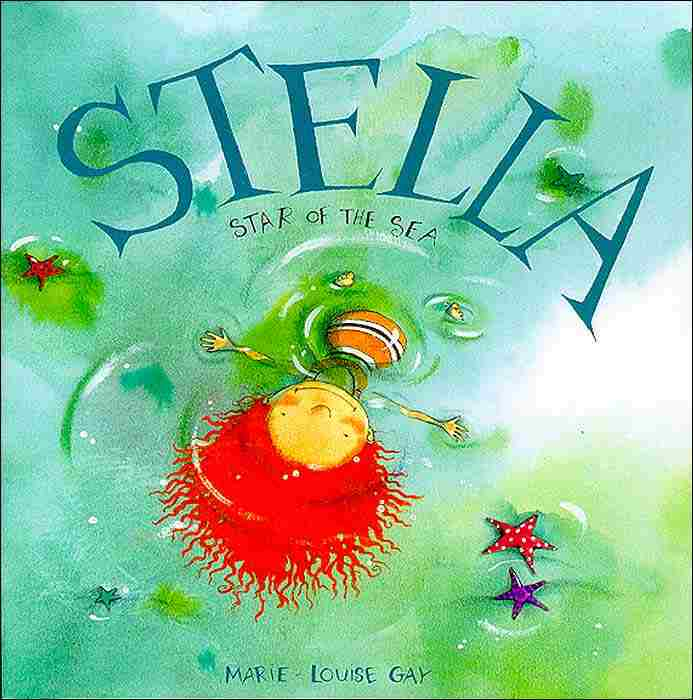
57.  Stella—Stella: Star of the Sea (Mary-Louise Gay)
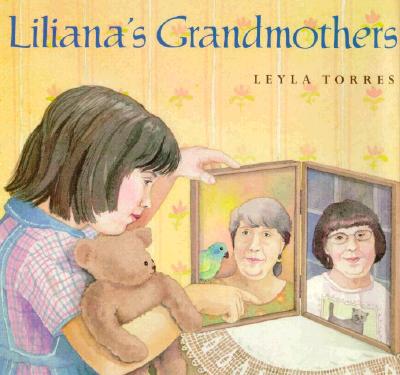
58.  Liliana—Liliana’s Grandmothers (Leyla Torres)


59.  Allison—Alison Investigates: Does Chocolate Milk Come from Brown Cows? (Colette Omans Nicoletta)
60.  Samantha—Samantha on a Roll (Linda Ashman)
61.  Alyssa—Alyssa and the Spider (Alan St. Jean)
62.  Molly—Have Fun, Molly Lou Melon (Patty Lovell)
63.  Alexandra—Dear Alexandra (Helen Gudel)
64.  Violet—Goodnight My Sweet Violet (Heather Young)
65.  Julia—Mikolay & Julia in the Attic (Magda M. Olchawska)
66.  Sadie—Sadie’s Dream (Charlotte Perry)
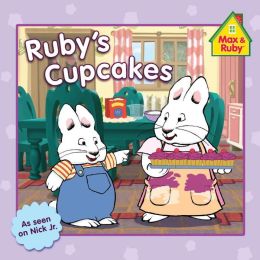
67.  Ruby—Ruby’s Cupcakes (Rosemary Wells)
68.  Eva—Eva and Sadie and the Worst Haircut Ever (Jeff Cohen)


Thursday, July 3, 2014

50 BOOKS FOR 50 STATES


I’ve long believed that reading across America is one of the best ways to experience it. The Fourth of July celebrates a nation, but really it’s a community-by-community display of attitudes and priorities. Fireworks? A parade? A lawn party? A slo-pitch softball tournament? A symphony? What say you? No, you have to travel to truly rejoice in America.

As long as there have been travelers, there have been attempts to put the experience into words. But sometimes what has already been written can improve the ride. On my first-ever cross-country RV excursion in 1995-96, I began by reading a trilogy of road classics to get me in the mood – On the Road by Jack Kerouac, Travels with Charley by Steinbeck and Blue Highways by William Least Heat-Moon. But I soon found an even better way to give myself a sense of place – by regionalizing my reads.

So while we were parked for the night in Montgomery, I journeyed through the pages of To Kill a Mockingbird, and I could almost taste the red Alabama dust. In Missoula, I dove into A River Runs Through It and began to understand Montanans’ relationship with the landscape. On the banks of the Mississippi River, I spent some time with Twain’s Adventures of Huckleberry Finn and realized the myriad stories at every bend in the great waterway.

Each and every time, I was infused with a greater understanding of where I was.

I could ponder Thomas Wolfe’s description of North Carolina in Look Homeward, Angel (“clumped woodlands, the bending sweep of the fields, the huge flowing lift of the earth-waves”) and then appreciate the scenic poetry myself during my drive the following day. I could read Edward Abbey’s Desert Solitaire in Utah’s Arches National Park and then anticipate a sunrise consisting of a “flaming globe, blazing on the pinnacles and minarets and balanced rocks.”

So for the would-be traveler out there—either by vehicle or vicariously—what follows is a list of 50 must-reads, one for each state. The list, of course, is subjective. In fact, a compilation of books NOT included would feature the likes of Midnight in the Garden of Good and Evil (John Behrendt, Georgia), Empire Falls (Richard Russo, Maine), and Walden (Henry David Thoreau, Massachusetts). But then I would have to discard some of these:

  1. Alabama: To Kill a Mockingbird (Harper Lee)
  2. Alaska: Coming Into the Country (John McPhee)
  3. Arizona: The Monkey Wrench Gang (Edward Abbey)
  4. Arkansas: I Know Why the Caged Bird Sings (Maya Angelou)
  5. California: Cannery Row (John Steinbeck) 
  6. Colorado: Plainsong (Kent Haruf)
  7. Connecticut: Revolutionary Road (Richard Yates)
  8. Delaware: Blinded (Kashamba Williams)
  9. Florida: Their Eyes Were Watching God (Zora Neale Thurston)
  10. Georgia: Gone With the Wind (Margaret Mitchell)
  11. Hawaii: Hawaii (James Michener)
  12. Idaho: The Man Who Fell in Love with the Moon (Tom Spanbauer)
  13. Illinois: The Jungle (Upton Sinclair)
  14. Indiana: The Magnificent Ambersons (Booth Tarkington)
  15. Iowa: The Iowa Baseball Confederacy (W.P. Kinsella) 
  16. Kansas: PrairyErth (William Least Heat Moon)
  17. Kentucky: Icy Sparks (Gwyn Hyman Rubio)
  18.  Louisiana: A Confederacy of Dunces (John Kennedy Toole)
  19. Maine: The Cider House Rules (John Irving)
  20. Maryland: Narrative of the Life of Frederick Douglass (Frederick Douglass)
  21. Massachusetts: Home Town (Tracy Kidder)
  22. Michigan: Middlesex (Jeffrey Eugenides)
  23. Minnesota: Main Street (Sinclair Lewis)
  24. Mississippi: Absalom, Absalom (William Faulkner)
  25. Missouri: The Adventures of Tom Sawyer (Mark Twain) 
  26. Montana: A River Runs Through It (Norman Maclean)
  27.  Nebraska: O Pioneers! (Willa Cather)
  28.  Nevada: Fear and Loathing in Las Vegas (Hunter S. Thompson)
  29. New Hampshire: A Prayer for Owen Meany (John Irving)
  30.  New Jersey: American Pastoral (Philip Roth)
  31. New Mexico: The Milagro Beanfield War (John Nichols)
  32. New York: The Great Gatsby (F. Scott Fitzgerald)
  33. North Carolina: Look Homeward, Angel (Thomas Wolfe)
  34. North Dakota: Peace Like a River (Leif Enger)
  35. Ohio: Winesburg, Ohio (Sherwood Anderson)  
  36. Oklahoma: Pigs in Heaven (Barbara Kingsolver)
  37. Oregon: Sometimes a Great Notion (Ken Kesey)
  38.  Pennsylvania: Rabbit, Run (John Updike)
  39. Rhode Island: My Sister’s Keeper (Jodi Picoult)
  40.  South Carolina: The Lords of Discipline (Pat Conroy)
  41. South Dakota: Dakota: A Spiritual Geography (Kathleen Norris)
  42. Tennessee: The Orchard Keeper (Cormac McCarthy)
  43. Texas : The Last Picture Show (Larry McMurtry)
  44. Utah: Desert Solitaire (Edward Abbey)
  45. Vermont: South of the Northeast Kingdom (David Mamet) 
  46. Virginia: The Confessions of Nat Turner (William Styron)
  47. Washington: The Lone Ranger and Tonto Fistfight in Heaven (Sherman Alexie)
  48. West Virginia: The Glass Castle (Jeannette Walls)
  49. Wisconsin: Population: 485 (Michael Perry)
  50. Wyoming: Close Range (Annie Proulx)


Tuesday, July 1, 2014

15 BIZARRE FACTS ABOUT ERNEST HEMINGWAY


“Every man’s life ends the same way,” Ernest Hemingway once declared. “It is only the details of how he lived and how he died that distinguish one man from another.” With that in mind, this edition of the Why Not 100 presents 15 odd and extraordinary facts—somewhat chronologically—about the Pulitzer- and Nobel-winning author, his family, and how he lived and died:

1. HIS MOTHER LIKED TO DRESS HIM AS A GIRL

Grace Hemingway liked to fashion young Ernest’s hair like a girl and dress him in lacy white frocks. She called him her “Dutch dolly” and her “Sweetie.” Ernest pronounced it “Fweetee.” But he soon grew not to like it. One day he retorted, “I not a Dutch dolly… Bang, I shoot Fweetee.” As John Walsh wrote in The Independent, “He’d spend the rest of his life in a galloping parody of masculinity.”

2. HE HUNTED JUST ABOUT ANYTHING

At age three, Hemingway killed a porcupine. Then he ate it. In 1940, he went out with his third wife and two of his kids and reportedly killed four hundred jackrabbits in a single day. While deep sea fishing one day, he grabbed a Thompson submachine gun and opened fire on a group of sharks that were scavenging a huge tuna that he was trying to land. He once established a record by catching seven marlins in one day. Over countless hunting trips through the years, he bagged lions, leopards, hyenas… “I spent a lot of time killing animals and fish,” he once told Ava Gardner, “so I won’t kill myself.”

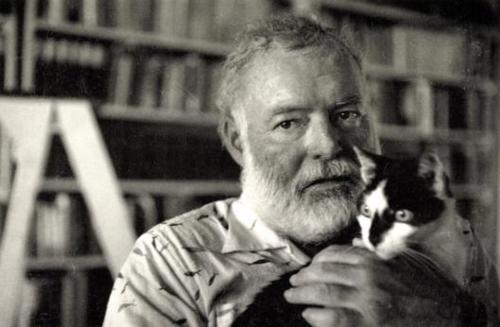
3. HE LOVED A SIX-TOED CAT

When he wasn’t hunting big cats, Hemingway loved little ones. And his most beloved pet was a polydactyl cat—that is, a cat with six toes—named Snowball. It was a gift from a ship’s captain. Today, the Ernest Hemingway Home and Museum in Key West, Florida—the writer’s 1930s island retreat—is positively brimming with dozens and dozens of descendants of Hemingway’s original cats, and about half of them carry a polydactyl gene.


4. HIS LONGEST SENTENCE WAS REALLY LONG

The longest sentence Hemingway ever wrote—in Green Hills of Africa—consisted of 424 words: “That something I cannot yet define completely but the feeling comes when you write well and truly of something and know impersonally you have written in that way and those who are paid to read it and report on it do not like the subject so they say it is all a fake, yet you know its value absolutely; or when you do something which people do not consider a serious occupation and yet you know truly, that it is as important and has always been as important as all the things that are in fashion, and when, on the sea, you are alone with it and know that this Gulf Stream you are living with, knowing, learning about, and loving, has moved, as it moves, since before man, and that it has gone by the shoreline of that long, beautiful, unhappy island since before Columbus sighted it and that the things you find out about it, and those that have always lived in it are permanent and of value because that stream will flow, as it has flowed, after the Indians, after the Spaniards, after the British, after the Americans and after all the Cubans and all the systems of governments, the richness, the poverty, the martyrdom, the sacrifice and the venality and the cruelty are all gone as the high-piled scow of garbage, bright-colored, white-flecked, ill-smelling, now tilted on its side, spills off its load into the blue water, turning it a pale green to a depth of four or five fathoms as the load spreads across the surface, the sinkable part going down and the flotsam of palm fronds, corks, bottles, and used electric light globes, seasoned with an occasional condom or a deep floating corset, the torn leaves of a student’s exercise book, a well-inflated dog, the occasional rat, the no-longer-distinguished cat; all this well shepherded by the boats of the garbage pickers who pluck their prizes with long poles, as interested, as intelligent, and as accurate as historians; they have the viewpoint; the stream, with no visible flow, takes five loads of this a day when things are going well in La Habana and in ten miles along the coast it is as clear and blue and unimpressed as it was ever before the tug hauled out the scow; and the palm fronds of our victories, the worn light bulbs of our discoveries and the empty condoms of our great loves float with no significance against one single, lasting thing—the stream.”

5. HE LIKED TO WRITE ON HIS FEET

Hemingway supposedly said, “There is nothing to writing. All you do is sit down at a typewriter and bleed.” But legend has it (and photos confirm) that he often preferred to write standing up. He usually wrote in his bedroom, where there was a desk. But instead, he placed a typewriter atop a bookcase. He called that his “work desk.” And he generally liked to write while standing, moving only to shift his weight from one leg to another.


6. HE DIED BEFORE HE DIED

Hemingway survived two airplane crashes in two days. He was in Nairobi in 1954 when he and his fourth wife, Mary, chartered a sightseeing flight toward the Belgian Congo. But the plane struck a utility pole and crash landed in heavy brush. Mary broke two ribs. Her husband sprained his shoulder. So they boarded a second plane the next day, hoping to reach medical care in Entebbe. This time, the airplane burst into flames on the runway. Hemingway ruptured his liver, spleen and kidney and fractured his skull. By the time they finally reached Entebbe, a page one newspaper headline was shouting: HEMINGWAY, WIFE KILLED IN AIR CRASH. A photo caption began added: “NO SIGN OF LIFE” AT WRECK.

7. HE PUT THE “ART” IN PARTY

In 1959, Mary spent months preparing for a lavish 60th birthday party for her husband. She flew exotic foods into Pamplona—Chinese food from London, codfish from Madrid, champagne from Paris. She hired waiters, barmen and cooks from all over the world, too. There were flamenco dancers. There were fireworks. There was a “shooting booth.” Guests included Italian royalty and the Maharajah of Behar. The party lasted from noon of July 21st to noon of July 22nd.


8. HE COULDN’T SHAKE WRITER’S BLOCK

Once he reached his sixties, Hemingway found that he could no longer write. In the spring of 1961, he was asked to contribute something brief to a presentation volume for John F. Kennedy’s inauguration. Just a single sentence. He couldn’t do it. “It just won’t come anymore,” he told a close friend, and he was weeping as he said it.

9. HE COULDN’T DEFEAT DEMENTIA

At the end of his life, Hemingway was fraught with paranoid delusions. He thought his friends were trying to murder him. He thought two men working late in a bank were “Feds” auditing his bank accounts. When his car grazed another vehicle, he worried that he would be thrown in jail. He was given medication and electro-shock therapy. Three months before his death, Mary found him sitting with a gun in one hand and two bullets in the other. Not long after that, he tried to kill himself—by walking into the path of a plane taxiing on a runway.

10. HE DIDN’T KILL HIMSELF, BUT REALLY HE DID

The New York Times headline that appeared on the morning of July 3, 1961 declared: HEMINGWAY DEAD OF SHOTGUN WOUND; WIFE SAYS HE WAS CLEANING WEAPON. The early assessment was that, clad in a robe and pajamas on a morning  19 days before his 62nd birthday, he was cleaning his favorite double-barreled, 12-gauge shotgun at his house in Ketchum, Idaho. Mary, still in bed, was awoken by a shotgun blast. She went downstairs to find her husband’s body near a gun rack in the foyer. After a preliminary investigation, the Blaine County sheriff stated that the death “looks like an accident” and “there is no evidence of foul play.” As it turns out, along with the two air crashes, over the years Hemingway survived everything from skin cancer and malaria to hepatitis and diabetes to blood poisoning and a car accident that hurled him through the windshield. That may be one reason why it took Mary several months to admit that her husband had actually killed himself.


11. SUICIDE WAS A TRAGIC FAMILY TRADITION

Hemingway’s grandfather committed suicide. His father shot himself at the age of 57, using a Civil War pistol. His brother and sister and a granddaughter killed themselves, too. The New York Times described the family tree as “blood-soaked as any from Greek tragedy,” and the term ”Hemingway curse” has become shorthand for the cycle of mental illness, addiction and suicide can afflict multiple generations. In his book Strange Tribe: A Family Memoir, John Hemingway (the author’s youngest son) called suicide “the family exit.” In 2013, a documentary chronicling the family’s troubled history was shown at the Sundance Film Festival. It was called Running from Crazy.

12. HE NEVER MET HIS MOST FAMOUS DESCENDANT

Actress Mariel Hemingway was born less than five months after her famous grandfather ended his life. For years, she believed that he had accidentally killed himself. No one told her otherwise. She was named after the Cuban port of Mariel, where her father and grandfather regularly went fishing. She’s an author, too—of a yoga memoir, an organic foods cookbook, and two self-help books. When she was a baby, her older sister Margaux (who would die from an intentional overdose at the age of 41) was so jealous that she cut off Mariel’s eyelashes with a scissors. Mariel’s oldest sister Joan (called Muffet) used LSD so prolifically that it triggered a full-blown psychosis. After she ran naked through the streets of Ketchum, Idaho, she was finally institutionalized.


13. HIS BROTHER FOUNDED A MICRO-NATION

Leicester Hemingway, Ernest’s younger brother and a somewhat successful author himself, towed a small barge 12 nautical miles off the coast of Jamaica, anchored it to the floor of the Caribbean with the aid of an old Ford Engine block, and declared it New Atlantis. Citing the 1856 Guano Islands Act, he claimed half of the barge as a new nation and half for the United States. A tropical storm destroyed it two years later, so he created a second micro-nation—on a 300-foot-long sandbar in the Bahamas. The U.S. State Department’s response? “Attempts at creating this island would be viewed by the United States as a highly undesirable development averse to our national security, particularly as it might encourage archipelagic claim.” Leicester shot himself less than a decade later.

14. HIS SON SPENT HIS LAST DAYS AS A WOMAN

Hemingway’s son, Gregory, was a doctor who lost his medical license, a husband who divorced four wives, and a transvestite and transsexual who late in his life was arrested for walking down a Key Biscayne street naked, carrying a dress and high heels. A kind and gentle person who sometimes preferred to be called Vanessa or Gloria, Hemingway collapsed and died six days after being arrested (for the naked thing) in 2001. As the Chicago Tribune wrote, “The third son of the 20th century’s most resolutely macho literary figure had died, at age 69, in a women’s jail.”

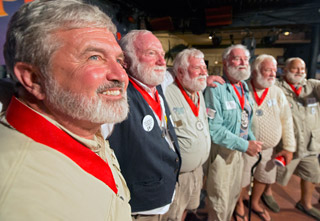
15. HEMINGWAY COMES BACK TO LIFE EVERY JULY

Every year on the third Saturday in July at Sloppy Joe’s Bar in Key West, the Hemingway Look-Alike Society holds the largest sanctioned look-alike competition in the world. The 34th annual “Papa” Hemingway Look-Alike Contest, a highlight of the annual Hemingway Days celebration, took place in 2014. More than 120 look-alikes entered, the winner (selected by previous winners) being crowned “Papa.” It’s a bunch of portly, white-bearded men, most of them wearing safari garb or wool fisherman’s sweaters. One winner (Bob Anderson, 1991) previously made props and sets for the film To Kill a Mockingbird. Another (Leo Rost, 1983) was a published playwright. (By the way, there’s an urban legend that Charlie Chaplin once anonymously entered a Chaplin look-alike contest. He finished in third place.)


Saturday, June 28, 2014

5 LITERARY LANDMARKS IN THE GOLDEN STATE


The Gold Rush notwithstanding, California’s most precious commodity may be the nugget of an idea, which turns into a story, which graces a piece of literature for the ages. The number of famous authors who lived and worked in San Francisco alone is remarkable, from Ambrose Bierce and Dashiell Hammett to Upton Sinclair and Mark Twain. Several of them even have streets named after them. Stroll across Keroauc Drive. Stretch your legs at William Saroyan Place.

But the convergence of literature and place is a curious one, and it begs a question: Do we really need to create monuments to writers? Shouldn’t the writer’s plays or poems or novels be enough of a legacy? The answers: Yes and yes. While a writer’s creations are legacy enough, it can also be fascinating to understand the setting that sparked that creativity.

With that in mind, here are five of the most significant such landmarks in California, all within three hours of each other. It would make a helluva weekend literary excursion. We’ll start north and move south:

1. JACK LONDON’S WOLF HOUSE

On the outskirts of the community of Glen Ellen in southern Sonoma County, you can get more than just a taste of London. You can buy a used or rare book at the Jack London Bookstore, grab a few beers at the Jack London Saloon and sleep it off at the Jack London Lodge. But whatever you do, don’t miss 800-acre Jack London State Historic Park at 2400 London Ranch Road. Few men crammed more adventure into life than London, a full-time author and adventurer. But nestled among the redwoods in the state park is an ironic memorial to the man—a burned-out symbol of his unrealized dreams.

By 1905, London, already world famous for Call of the Wild, The Sea Wolf and other stories based on his own experiences, began purchasing land in the Sonoma Valley, seeking “a quiet place in the country to write and loaf in.” By 1911, he owned nearly 1,400 acres, which he called Beauty Ranch. He moved into a cottage in the middle of his holdings, and from there he supervised the construction of his dream house. It was a four-story, 26-room, nine-fireplace mansion, made from boulders of maroon lava and redwood logs. There was a two-story living room, a dining room seating 50, a pool stocked with bass, a gun and trophy room, a library, a sleeping tower. The entire structure, which he named Wolf House, stood on an extra-thick concrete foundation to withstand earthquakes. London expected it to stand for one thousand years.

In late July 1913, the $80,000 project was nearly complete, and London wrote, “…when it is done, I shall be really comfortable for the first time in my life.” But three weeks later, just as he and his wife Charmian, were preparing to move in, Wolf House burned to the ground, a mystery that remains unsolved. Crushed and suspicious, London planned to rebuild, but he died of kidney disease exactly 39 months later. His dream house remains a haunting collection of charred rock walls and chimneys among the towering trees.


2. LAWRENCE FERLINGHETTI’S CITY LIGHTS BOOKS

In 1953, poet Lawrence Ferlinghetti and Peter D. Martin founded a simple bookstore in San Francisco’s North Beach district. City Lights was the nation’s first all-paperback emporium, situated at 261 Columbus Avenue, and while it carried with it a whiff of anti-authoritarian sensibilities, it was another couple of years before it offered the scent of revolution.

Ferlinghetti expanded from selling books to creating them in 1955, launching City Lights Publishers. The fourth book in his Pocket Poets Series was a poem by Allen Ginsberg called “Howl.” Its publication proved to be a watershed moment for the book and the bookstore. Ginsberg’s work elicited obscenity charges, followed by the arrest of Ferlinghetti and long court trial (in which the beatniks beat the rap), all of which turned the poem into a nexus of censorship debate, the poet into a herald of insurgent literature and City Lights into Ground Zero of everything bookishly beatific. Tour buses even began to pull to a halt in front of City Lights, passengers eager to claim beatnik sightings.

“Howl,” which had an original print run of 1,000 copies, now has something like 800,000 copies in print. City Lights Publishers has published more than 200 titles, and the bookstore has expanded several times over the years. It is no longer exclusively paperback, and isn’t solely a small press outlet. You can find new-release hardcovers from major publishing houses on any of its three stocked-to-the-gills floors. But while the place has become internationally famous, the attitude remains intimate and alternative. Inscriptions above doorways pronounce things like “Abandon all despair, ye who enter here,” and books are listed under quirky categories like Green Politics, Commodity Aesthetics, Muckraking, Anarchism and Class War.

In many ways, City Lights’ founder came full circle in 1998 when he was appointed San Francisco’s first Poet Laureate. If it seems like a somewhat Establishment honor, know that his inaugural speech was vintage Ferlinghetti. Taking the measure of “this far-out city on the left side of the world,” he rallied against freeways, warplanes and chain stores, called for writing poems that say something supremely important, and suggested painting the Golden Gate Bridge golden.


3. EUGENE O’NEILL’S TAO HOUSE

By early 1937, Eugene O’Neill had firmly established himself as the architect of modern American theater. Having refashioned it as serious art rather than a pleasant diversion, he had already had 35 plays produced and had earned three Pulitzer Prizes. But as firmly entrenched as O’Neill the playwright was, O’Neill the man was not. He and his wife Carlotta (she was his third wife; he was her fourth husband) were living in a San Francisco hotel.

One year earlier, however, O’Neill had become the only playwright from the United States to win the Nobel Prize. The accompanying stipend allowed the couple to purchase a 158-acre ranch near Danville, California, a plot of land offering a view of Mount Diablo across the San Ramon Valley. There they built what O’Neill, always a lover of the sea, hoped would be his “final harbor,” a quirky house with a Spanish colonial exterior but Asian inclinations.

They named it Tao House, a nod to O’Neill’s interest in Eastern philosophy and his wife’s yen for Oriental art, and indeed there are several elements of Taoism inside and out—from the curved walkways to the sky-blue ceilings and terra cotta floors. Despite the view, the outdoor pool and the player piano, there is a somewhat shadowy aura about the house, and the existence of colored mirrors—green, blue, even black—adds to the ghostly atmosphere. But as the park ranger will explain, it’s not a haunted house; it’s just the house of a haunted man.

O’Neill didn’t care for guests traipsing about his house, ironic considering it is now open for tours. Every Sunday in May, the Eugene O’Neill Foundation presents dramatic readings of the playwright’s works in a historic barn on the premises, and one weekend in October is set aside for a full, costumed performance of an O’Neill play. But nothing can match the drama of a visit to O’Neill’s isolated second-floor study where he penned his final and most successful plays, including “The Iceman Cometh”, “A Moon For the Misbegotten,” and the Pulitzer Prize-winning “Long Days Journey Into Night.”


4. DOC RICKETTS’S LAB

Perhaps nobody tapped the intimate relationship between humans and the places they inhabit more profoundly than John Steinbeck, California’s only Nobel-prize-winning novelist, who introduced readers the world over to the people harvesting the Salinas Valley and the shores of Monterey Bay.

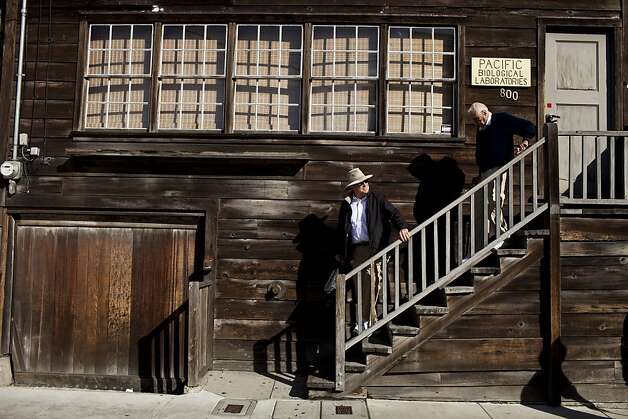
Steinbeck Country offers widespread homage to the man, ranging from a $10 million museum (the National Steinbeck Center in Salinas) to nominal nods (the Steinbeck Electrolysis Center). But the most sacred memorial to the writer is essentially a monument to his muse. It is a tiny, two-story, wooden edifice tucked along a stretch of the Monterey shoreline known as Cannery Row. Once named Pacific Biological Laboratories, it is now revered as Doc Ricketts’ Lab.

Ed Ricketts was a self-taught marine biologist who has been called the inspiration for the creation of the world-famous Monterey Bay Aquarium, which sprouted up next to his old lab in 1984. But he had an equally large impact on Steinbeck, who met him in 1930, after Ricketts had established PBL amid the city’s sardine canneries, brothels and flophouses.

For nearly a dozen years, until Steinbeck moved to the East Coast, the two would often end a day by swapping philosophy and swigging beers at the lab (which was rebuilt after being destroyed by fire in 1936). Steinbeck later claimed Ricketts “was part of my brain.” He became part of his literature, too, as the model for a half-dozen characters, most notably “Doc,” the beloved protagonist in Cannery Row and Sweet Thursday, the books that transformed Ed the scientist into Doc the legend.

Although Ricketts died in 1948 when his car was struck by the Del Monte Express train at the other end of Cannery Row, his famous laboratory remains very much alive. In 1957, it was sold to a group of 14 local men, several of them Doc’s old friends, and it became an exclusive club of sorts. Every Wednesday for years, the men enjoyed cold drinks and cool jazz, continuing the celebration of artistry and informality at 800 Cannery Row.

But in 1993, the remaining members of the group decided to assure that such sacred ground was treated reverently. They sold Doc’s lab for a song to the City of Monterey, and the Cannery Row Foundation sponsored a restoration and seismic retrofit so successful that the city recently received the Governor’s Award for Historic Preservation.

While the lab is used for special occasions, it is open for public tours only three times a year—on Steinbeck’s birthday (February 27), on Ricketts’ birthday (May 14) and during the annual Sardine Festival (in early June). Visitors can imagine themselves back into the 1930s, when a biologist-philosopher found life teeming in the strangest places and his writer friend found much the same thing.


5. ROBINSON JEFFERS’S TOR HOUSE

Poet Robinson Jeffers and his wife, Una, arrived in Carmel, California—a few miles south of Cannery Row on the Monterey Peninsula—in 1914. They realized that, as Jeffers wrote, they “had come without knowing it to their inevitable place.” Often, their walks would take them to a large and nearly empty tract of land known as Carmel Point, where only the ocean and the elements reigned. Their favorite spot was a craggy hill—or tor—which by 1919 would mark the site of their home, the Tor House, built primarily from the rocks of Carmel Point (though one can also spot lava from Hawaii, a headstone from Ireland, even a portion of the Great Wall of China).

Visitors today can experience the scene just as Jeffers did—or at least close to it, relaxing in the poet’s furniture while listening to poems written about and within those stone walls. The Tor House, located at 26304 Ocean View Avenue, offers docent-led tours. But it has always attracted visitors over the years, from Charlie Chaplin to Charles Lindbergh.

When Jeffers lived there, most days were quiet and predictable. He would construct his poems in the morning and his home in the afternoon. This work included a romantic decision in 1920 to build for Una a stone tower reminiscent of ancient Irish architecture. For five years, Jeffers rolled boulders up from his private beach and meticulously set them into place, eventually constructing a tower 40 feet high and, in places, six feet thick. He named it Hawk Tower, and with typical poetry, observed, “I hung stone in the sky.”

While touring the tower, visitors are first led into the two tiny rooms on the ground floor, one of them— “the dungeon”—several feet below ground level. Then they corkscrew their way up a secret stairway to Una’s second-floor sanctuary, where they might enjoy a Jeffers paean to his love. From there, visitors can ascend to a little turret on the third floor and then an even steeper stairway to the top of the turret, commanding a breathtaking view of the ocean and the remarkable development surrounding the once-lonely Jeffers abode.

Up there, looking out toward the crashing waves, one realizes that Jeffers’ finest poem was made of stone and that, as he wrote in “Carmel Point,” its pristine beauty “lives in the very grain of the granite.”


Wednesday, June 18, 2014

25 BOOKS ABOUT FREEDOM SUMMER


My Mantelpiece: A Memoir of Survival and Social Justice, recently published by Why Not Books, is Carolyn Goodman’s account of her lifetime of love and loss, courage and conviction. Her life was punctuated by tragedy—a brother’s premature death, childhood molestation, teenaged abortion, a mother’s callousness, a father’s suicide, the loss of two husbands. But hers is foremost a tale of survival, of turning personal anguish into social conscience—and the fulcrum of this tragedy-and-triumph dichotomy was the murder of her son in the summer of 1964.

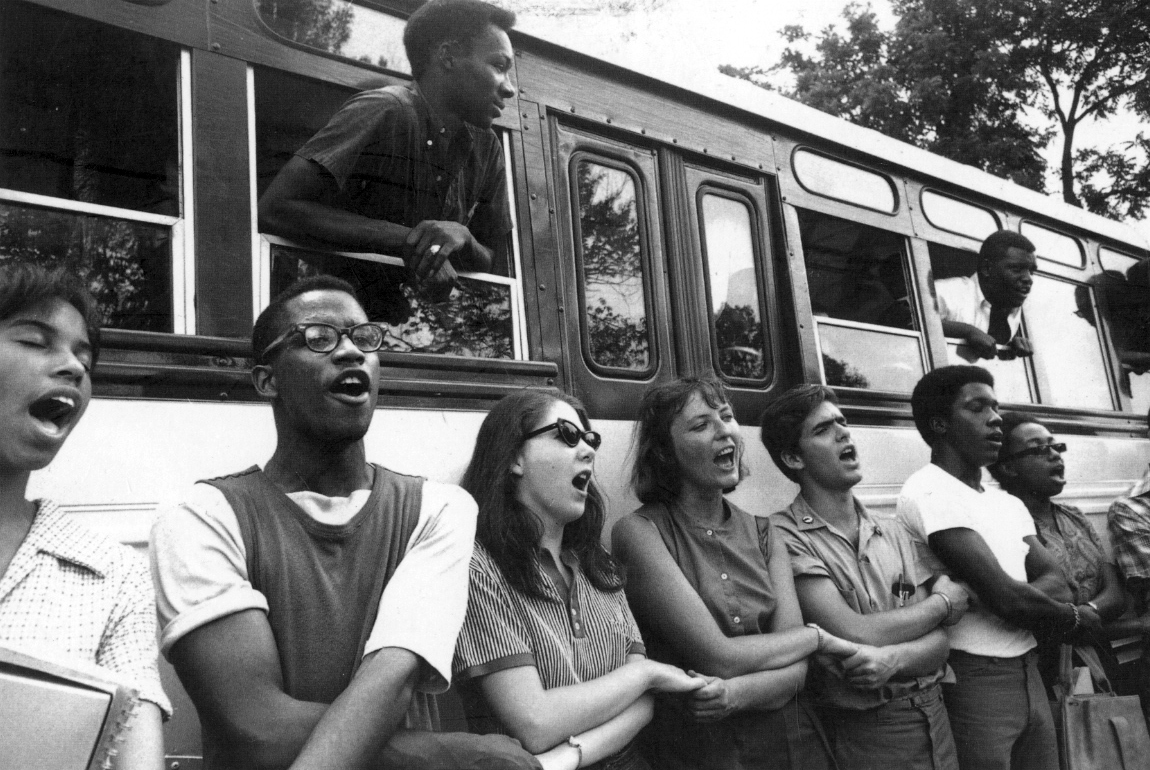
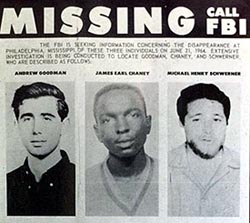
That was Freedom Summer, when the forces of good went on the offensive, flooding the South with northern college students who would start Freedom Schools and register African-American voters. On the very first day of summer, Carolyn’s 20-year-old son, Andy, was one of three volunteers to disappear in Philadelphia, Mississippi, an event that galvanized the nation and transformed the civil rights struggle.


The names Goodman, Chaney and Schwerner—their bodies were discovered 44 days later—still spark raw emotion in those who recall the era’s turmoil. Carolyn Goodman turned her son’s martyrdom into a mission. She formed The Andrew Goodman Foundation, organized an anniversary Freedom Summer, and produced documentary films celebrating young activists. In 1999, she was arrested at a protest in New York City—at age 83. She passed away in 2007, but not before recounting her life—and the lessons therein—in full.

On the 50th anniversary of the Mississippi Summer Project, My Mantelpiece marks the first time that a family member of one of the victims has expounded about the experience. It is an intimate perspective of Freedom Summer—the story of one mother, one cause, one decision, one tragedy, and the myriad emotions it spawned, from guilt to pride to resolve.

But it also one of many ways in which Freedom Summer has been explored over the years—historically, legally, spiritually, in fiction, in books for adults and for young readers, in first-person accounts and academic studies. A journey through the literature is a means of examining this seminal moment in the civil rights struggle from all angles.

Friday, June 13, 2014

78 AUTHOR ALMA MATERS


Prospective authors, take note: The list of literary legends who didn’t attend college for one reason or another includes Ernest Hemingway, Mark Twain, Walt Whitman, Edith Wharton, Truman Capote, Ray Bradbury, Raymond Carver, Raymond Chandler, Dorothy Parker, Maya Angelou, William Saroyan, John Cheever, Sherwood Anderson, and Louis L’Amour. And the likes of Edgar Allen Poe, Jack London, J.D. Salinger, and Henry Miller made only fleeting attempts at the university experience.

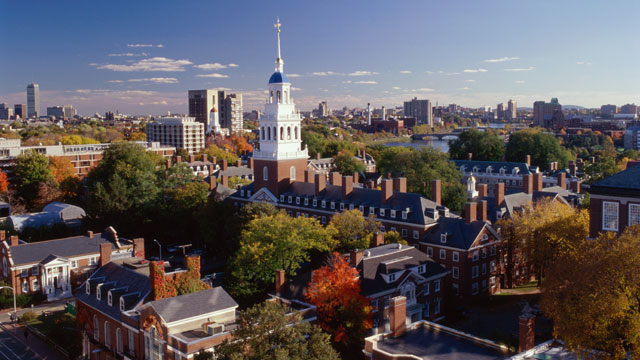
But before you decide to give the heave-ho to higher education, you might be interested to learn that these folks went to Harvard: Henry David Thoreau, Ralph Waldo Emerson, T.S. Eliot, Robert Frost, John Updike, Horatio Alger, Gertrude Stein, Norman Mailer, William S. Burroughs, John Dos Passos, George Plimpton, Michael Crichton, Peter Benchley, and Eric Segal.

Every year, the U.S. News & World Report puts out a ranking of American colleges and universities—based on all sorts of criteria. But I wondered: How would we rank the way they’ve churned out celebrated writers?

So I came up with a list of 128 American authors, poets, and playwrights—from Pulitzer winners to super-bestsellers, from 19th century transcendentalists to 21st century “Oprah” faves. Did I miss some good ones? Undoubtedly. But the list is as varied as this dozen: Nathaniel Hawthorne, Stephen Crane, Langston Hughes, Toni Morrison, S.E. Hinton, James Michener, John Irving, Thomas Pynchon, Dave Eggers, Garrison Keillor, Daniel Steel, and R.L. Stine. Or if you prefer, the list included the authors of everything from Slaughterhouse-Five to Seabiscuit to Superfudge.

I slotted them by undergraduate degrees (including those who made a decent stab at getting a degree if not quite finishing the deal—guys like Frost at Harvard, John Steinbeck at Stanford, and Cormac McCarthy at Tennessee). Then I ranked the schools—first by quantity, then by legacy (or, to be honest, personal preference). Essentially, there’s a massive tie for 20th place, but I kept ranking them to the end.

The results suggest two obvious conclusions. One is that Harvard and Columbia have damn impressive literary pedigrees. The other is that the rest of America’s greatest writers drew on a remarkably diverse education. Here’s the list:

1. Harvard University
Henry David Thoreau, Ralph Waldo Emerson, T.S. Eliot, Robert Frost, John Updike, Horatio Alger, Gertrude Stein, Norman Mailer, William S. Burroughs, John Dos Passos, George Plimpton, Michael Crichton, Peter Benchley, Eric Segal


2. Columbia University
Langston Hughes, Zora Neale Hurston, Joseph Heller, Allen Ginsberg, Jack Kerouac, Herman Wouk, Carson McCullers, Paul Auster, Isaac Asimov, William Goldman

3. Princeton University
F. Scott Fitzgerald, Philip Roth, John McPhee, Jodi Picoult

4. Yale University
Robert Penn Warren, Eugene O’Neill, Thornton Wilder, Sinclair Lewis

5. University of Cal-Berkeley
Philip K. Dick, Terry McMillan, Beverly Cleary, Irving Stone

6. Cornell University
E.B. White, Kurt Vonnegut, Thomas Pynchon

7. Northwestern University
Saul Bellow, Sidney Sheldon, George R.R. Martin


8. City College of New York
Upton Sinclair, Bernard Malamud, Mario Puzo

9. Smith College
Sylvia Plath, Margaret Mitchell, Ann M. Martin

10. Rutgers University
Robert Pinsky, Junot Diaz, Janet Evanovich

11. Bowdoin College
Henry Wadsworth Longfellow, Nathaniel Hawthorne

12. Washington and Lee University
Tom Wolfe, Tom Robbins

13. Swarthmore College
James Michener, Jonathan Franzen

14. Sarah Lawrence College
Alice Walker, Ann Patchett

15. Duke University
William Styron, Anne Tyler

16. New York University
Judy Blume, Danielle Steel

17. Amherst College
Dan Brown, Scott Turow

18. Wesleyan University
Robert Ludlum, Robin Cook

19. University of Kansas
Sara Paretsky, Rex Stout

20. Huntingdon College
Harper Lee

21. Dartmouth College
Theodore Geisel

22. Stanford University
John Steinbeck

23. University of Mississippi
William Faulkner

24. University of New Hampshire
John Irving

25. University of Maine
Stephen King

26. Georgia College and State University
Flannery O’Connor

27. Mississippi University for Women
Eudora Welty

28. University of Utah
Wallace Stegner

29. University of Pittsburgh
Michael Chabon

30. Hampshire College
Jon Krakauer

31. University of Missouri
William Least Heat-Moon

32. University of Nebraska
Willa Cather

33. U.S. Naval Academy
Robert Heinlein

34. University of Arizona
Richard Russo

35. DePauw University
Barbara Kingsolver

36. Tulane University
John Kennedy Toole

37. University of New Mexico
Edward Abbey

38. University of Michigan
Arthur Miller


39. University of Tennessee
Cormac McCarthy

40. University of Texas
Rick Riordan

41. University of Tulsa
S.E. Hinton

42. Tuskegee University
Ralph Ellison

43. Howard University
Toni Morrison

44. University of Illinois
Dave Eggers

45. Mississippi State University
John Grisham

46. University of Minnesota-Twin Cities
Garrison Keillor

47. Haverford College
Dave Barry

48. University of Iowa
Tennessee Williams

49. University of Oregon
Ken Kesey

50. Fordham University
Don DeLillo

51. Michigan State University
Richard Ford

52. Syracuse University
Joyce Carol Oates

53. University of Vermont
Annie Proulx

54. Randolph-Macon Women’s College
Pearl Buck

55. The Citadel
Pat Conroy


56. San Jose State University
Amy Tan

57. University of Detroit Mercy
Elmore Leonard

58. Bradley University
Charles Bukowski

59. University of Notre Dame
Nicholas Sparks

60. Kenyon College
E.L. Doctorow

61. Loyola University-Maryland
Tom Clancy

62. Vassar College
Jane Smiley

63. Manhattan College
James Patterson

64. Ohio State University
RL Stine

65. Davidson College
Patricia Cornwell

66. University of Connecticut
Wally Lamb

67. Kenyon College
Laura Hillenbrand

68. University of Alabama
Winston Groom

69. Hofstra University
Nelson Demille

70. University of Pennsylvania
Zane Grey

71. UCLA
Jonathan Kellerman

72. Claverack College
Stephen Crane

73. Shippensburg University
Dean Koontz

74. Indiana University
Suzanne Collins

75. University of Louisville
Sue Grafton

76. Brandeis University
Mitch Albom

77. University of North Texas
Anne Rice

78. Brigham Young University
Stephenie Meyer