Pages

Wednesday, June 18, 2014

25 BOOKS ABOUT FREEDOM SUMMER


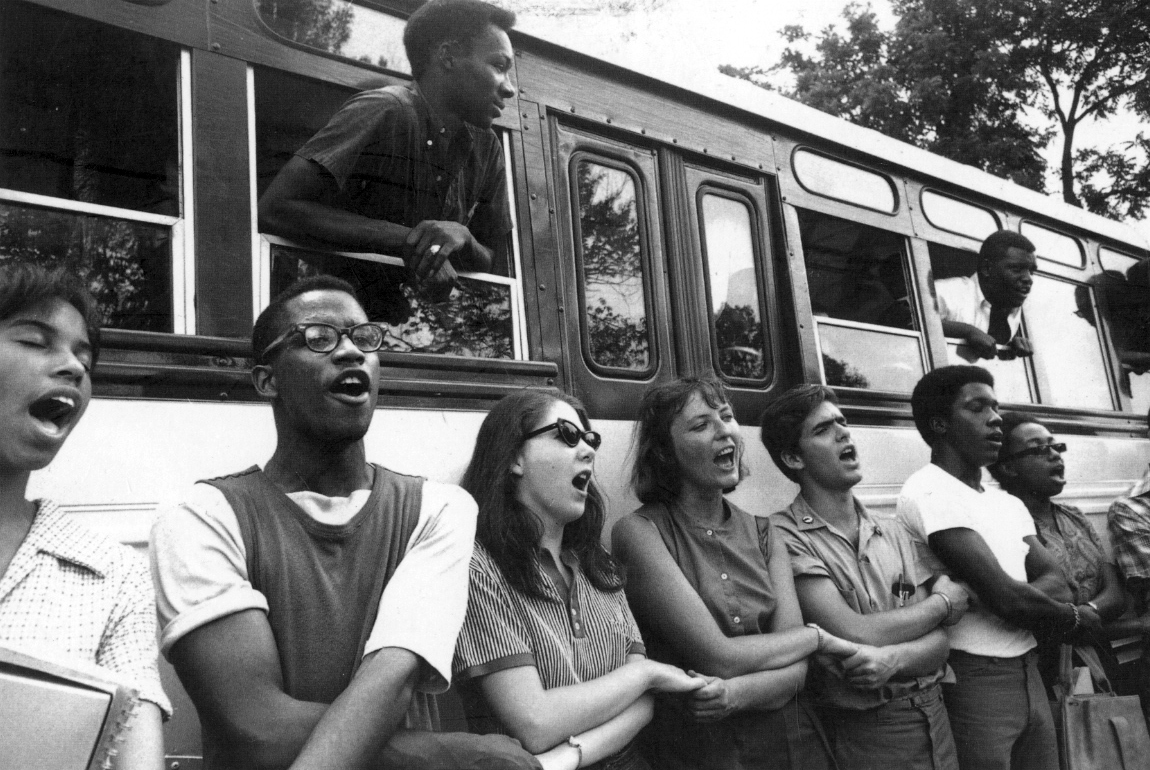
My Mantelpiece: A Memoir of Survival and Social Justice, recently published by Why Not Books, is Carolyn Goodman’s account of her lifetime of love and loss, courage and conviction. Her life was punctuated by tragedy—a brother’s premature death, childhood molestation, teenaged abortion, a mother’s callousness, a father’s suicide, the loss of two husbands. But hers is foremost a tale of survival, of turning personal anguish into social conscience—and the fulcrum of this tragedy-and-triumph dichotomy was the murder of her son in the summer of 1964.

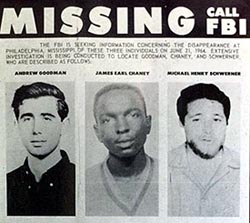
That was Freedom Summer, when the forces of good went on the offensive, flooding the South with northern college students who would start Freedom Schools and register African-American voters. On the very first day of summer, Carolyn’s 20-year-old son, Andy, was one of three volunteers to disappear in Philadelphia, Mississippi, an event that galvanized the nation and transformed the civil rights struggle.


The names Goodman, Chaney and Schwerner—their bodies were discovered 44 days later—still spark raw emotion in those who recall the era’s turmoil. Carolyn Goodman turned her son’s martyrdom into a mission. She formed The Andrew Goodman Foundation, organized an anniversary Freedom Summer, and produced documentary films celebrating young activists. In 1999, she was arrested at a protest in New York City—at age 83. She passed away in 2007, but not before recounting her life—and the lessons therein—in full.

On the 50th anniversary of the Mississippi Summer Project, My Mantelpiece marks the first time that a family member of one of the victims has expounded about the experience. It is an intimate perspective of Freedom Summer—the story of one mother, one cause, one decision, one tragedy, and the myriad emotions it spawned, from guilt to pride to resolve.

But it also one of many ways in which Freedom Summer has been explored over the years—historically, legally, spiritually, in fiction, in books for adults and for young readers, in first-person accounts and academic studies. A journey through the literature is a means of examining this seminal moment in the civil rights struggle from all angles.

Friday, June 13, 2014

78 AUTHOR ALMA MATERS


Prospective authors, take note: The list of literary legends who didn’t attend college for one reason or another includes Ernest Hemingway, Mark Twain, Walt Whitman, Edith Wharton, Truman Capote, Ray Bradbury, Raymond Carver, Raymond Chandler, Dorothy Parker, Maya Angelou, William Saroyan, John Cheever, Sherwood Anderson, and Louis L’Amour. And the likes of Edgar Allen Poe, Jack London, J.D. Salinger, and Henry Miller made only fleeting attempts at the university experience.

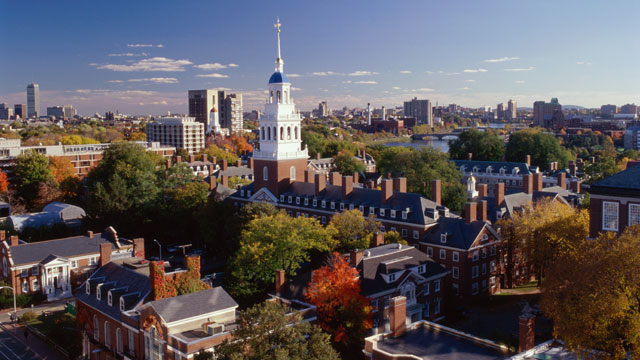
But before you decide to give the heave-ho to higher education, you might be interested to learn that these folks went to Harvard: Henry David Thoreau, Ralph Waldo Emerson, T.S. Eliot, Robert Frost, John Updike, Horatio Alger, Gertrude Stein, Norman Mailer, William S. Burroughs, John Dos Passos, George Plimpton, Michael Crichton, Peter Benchley, and Eric Segal.

Every year, the U.S. News & World Report puts out a ranking of American colleges and universities—based on all sorts of criteria. But I wondered: How would we rank the way they’ve churned out celebrated writers?

So I came up with a list of 128 American authors, poets, and playwrights—from Pulitzer winners to super-bestsellers, from 19th century transcendentalists to 21st century “Oprah” faves. Did I miss some good ones? Undoubtedly. But the list is as varied as this dozen: Nathaniel Hawthorne, Stephen Crane, Langston Hughes, Toni Morrison, S.E. Hinton, James Michener, John Irving, Thomas Pynchon, Dave Eggers, Garrison Keillor, Daniel Steel, and R.L. Stine. Or if you prefer, the list included the authors of everything from Slaughterhouse-Five to Seabiscuit to Superfudge.

I slotted them by undergraduate degrees (including those who made a decent stab at getting a degree if not quite finishing the deal—guys like Frost at Harvard, John Steinbeck at Stanford, and Cormac McCarthy at Tennessee). Then I ranked the schools—first by quantity, then by legacy (or, to be honest, personal preference). Essentially, there’s a massive tie for 20th place, but I kept ranking them to the end.

The results suggest two obvious conclusions. One is that Harvard and Columbia have damn impressive literary pedigrees. The other is that the rest of America’s greatest writers drew on a remarkably diverse education. Here’s the list:

1. Harvard University
Henry David Thoreau, Ralph Waldo Emerson, T.S. Eliot, Robert Frost, John Updike, Horatio Alger, Gertrude Stein, Norman Mailer, William S. Burroughs, John Dos Passos, George Plimpton, Michael Crichton, Peter Benchley, Eric Segal


2. Columbia University
Langston Hughes, Zora Neale Hurston, Joseph Heller, Allen Ginsberg, Jack Kerouac, Herman Wouk, Carson McCullers, Paul Auster, Isaac Asimov, William Goldman

3. Princeton University
F. Scott Fitzgerald, Philip Roth, John McPhee, Jodi Picoult

4. Yale University
Robert Penn Warren, Eugene O’Neill, Thornton Wilder, Sinclair Lewis

5. University of Cal-Berkeley
Philip K. Dick, Terry McMillan, Beverly Cleary, Irving Stone

6. Cornell University
E.B. White, Kurt Vonnegut, Thomas Pynchon

7. Northwestern University
Saul Bellow, Sidney Sheldon, George R.R. Martin


8. City College of New York
Upton Sinclair, Bernard Malamud, Mario Puzo

9. Smith College
Sylvia Plath, Margaret Mitchell, Ann M. Martin

10. Rutgers University
Robert Pinsky, Junot Diaz, Janet Evanovich

11. Bowdoin College
Henry Wadsworth Longfellow, Nathaniel Hawthorne

12. Washington and Lee University
Tom Wolfe, Tom Robbins

13. Swarthmore College
James Michener, Jonathan Franzen

14. Sarah Lawrence College
Alice Walker, Ann Patchett

15. Duke University
William Styron, Anne Tyler

16. New York University
Judy Blume, Danielle Steel

17. Amherst College
Dan Brown, Scott Turow

18. Wesleyan University
Robert Ludlum, Robin Cook

19. University of Kansas
Sara Paretsky, Rex Stout

20. Huntingdon College
Harper Lee

21. Dartmouth College
Theodore Geisel

22. Stanford University
John Steinbeck

23. University of Mississippi
William Faulkner

24. University of New Hampshire
John Irving

25. University of Maine
Stephen King

26. Georgia College and State University
Flannery O’Connor

27. Mississippi University for Women
Eudora Welty

28. University of Utah
Wallace Stegner

29. University of Pittsburgh
Michael Chabon

30. Hampshire College
Jon Krakauer

31. University of Missouri
William Least Heat-Moon

32. University of Nebraska
Willa Cather

33. U.S. Naval Academy
Robert Heinlein

34. University of Arizona
Richard Russo

35. DePauw University
Barbara Kingsolver

36. Tulane University
John Kennedy Toole

37. University of New Mexico
Edward Abbey

38. University of Michigan
Arthur Miller


39. University of Tennessee
Cormac McCarthy

40. University of Texas
Rick Riordan

41. University of Tulsa
S.E. Hinton

42. Tuskegee University
Ralph Ellison

43. Howard University
Toni Morrison

44. University of Illinois
Dave Eggers

45. Mississippi State University
John Grisham

46. University of Minnesota-Twin Cities
Garrison Keillor

47. Haverford College
Dave Barry

48. University of Iowa
Tennessee Williams

49. University of Oregon
Ken Kesey

50. Fordham University
Don DeLillo

51. Michigan State University
Richard Ford

52. Syracuse University
Joyce Carol Oates

53. University of Vermont
Annie Proulx

54. Randolph-Macon Women’s College
Pearl Buck

55. The Citadel
Pat Conroy


56. San Jose State University
Amy Tan

57. University of Detroit Mercy
Elmore Leonard

58. Bradley University
Charles Bukowski

59. University of Notre Dame
Nicholas Sparks

60. Kenyon College
E.L. Doctorow

61. Loyola University-Maryland
Tom Clancy

62. Vassar College
Jane Smiley

63. Manhattan College
James Patterson

64. Ohio State University
RL Stine

65. Davidson College
Patricia Cornwell

66. University of Connecticut
Wally Lamb

67. Kenyon College
Laura Hillenbrand

68. University of Alabama
Winston Groom

69. Hofstra University
Nelson Demille

70. University of Pennsylvania
Zane Grey

71. UCLA
Jonathan Kellerman

72. Claverack College
Stephen Crane

73. Shippensburg University
Dean Koontz

74. Indiana University
Suzanne Collins

75. University of Louisville
Sue Grafton

76. Brandeis University
Mitch Albom

77. University of North Texas
Anne Rice

78. Brigham Young University
Stephenie Meyer

Sunday, June 8, 2014

17 MOST PROLIFIC WRITERS IN HISTORY


In his memoir On Writing, Stephen King commented on how he was considered to be prolific despite having written “only” a few dozen novels to date (this was back in 2000). Yet he contended he was nothing compared to a British mystery novelist named John Creasey, who wrote more than five hundred novels under ten different names. On the other hand, some renowned novelists have written fewer than five books in a career. “Which is okay,” King stated, “but I always wonder two things about these folks: how long did it take them to write the books they did write, and what did they do with the rest of their time?”

Well, here are the 17 writers who are to “prolific” what King is to “horror.” In fact, King isn’t even close to making this list. But Creasey? He’s ninth.

Tuesday, June 3, 2014

74 CLASSIC BOOK TITLES BORROWED FROM LITERATURE


In 1934, a male English author named Evelyn Waugh wrote a book called A Handful of Dust, which focused on the breakdown of a marriage and has been named more than once as one of the 100 best English-language novels of the 20th century. It was originally called A Handful of Ashes, but after a dispute with his American publishers, Waugh renamed it—after a line from T.S. Eliot’s poem “The Waste Land,” which was written a dozen years earlier.

I will show you something different from either
Your shadow at morning striding behind you
Or your shadow at evening rising to meet you;
I will show you fear in a handful of dust.

But “The Waste Land,” regarded as one of the century’s most important poems and loosely following the legends of the Fisher King and the Holy Grail, also borrowed its title from another source. In his notes about the poem, Eliot wrote, “Not only the title, but the plan and a good deal of the incidental symbolism of the poem were suggested by Miss Jessie L. Weston’s book.” That book, From Ritual to Romance, was an academic examination of the roots of the King Arthur legend and had been published only two years earlier.

So let’s recap, shall we? Over the course of just 14 years, one book borrowed its title from a poem, which borrowed its title from another book. Oh, and a line from “The Waste Land” also led to the title of two Iain Banks novels—Consider Phlebas and Look to Windward. And another poem by Eliot (“Whispers of Immortality”) contributed the title for P.D. James’s The Skull Beneath the Skin. And still another bit of poetry by Eliot (“Gerontion”) sparked the title of another book, this one a detective novel by Peter Robinson called In A Dry Season. Who says all literature isn’t derivative?

Then again, these titular literary loans are far more common that you might think. Charles Dickens did it. Ernest Hemingway did it. William Faulkner did it. E.M. Forster, George Orwell, Margaret Mitchell, Maya Angelou… they all borrowed. In fact, Aldous Huxley, Agatha Christie, John Steinbeck, and Madeleine L’Engle were serial borrowers.

So for the Why Not 100, I have come up with a list that honors the best-of-the-best of the borrowers—74 titles from renowned authors, all of which were taken from other literary creations.

Wednesday, May 28, 2014

10 PATHS TO A GOOD IDEA


In 2014, I was invited give a TED talk—at TEDxMonterey to a room full of folks eager to hear about the latest insights, eye-opening innovations, impressive pursuits. I was joined on the list of presenters by a NASA space scientist who has discovered hundreds of distant planets, a charismatic marine biologist from Sri Lanka who studies humpback whales, a Naval captain who focuses on systemic strategy and complexity, a developmental psychologist, a tech innovator… All I do is tell stories. What the hell was I supposed to talk about?

So I told stories. More accurately, I told them how I FIND stories.

For me, the idea is always paramount. I’m often asked about the writing process, but that ignores the first step: What are you going to write about? Good writing begins before the first line is ever written. It all starts with subject matter that captures readers' attention, a story or angle that is simply too clever for an editor or publisher to pass up, something that just might make a student actually enthusiastic about writing.

I’m a bit of a literary jack of all trades, mostly because I enjoy experimenting, challenging myself. I’ve written more than 30 books for kids and adults, newspaper articles, magazine features, poems, movie screenplays, blogs, you name it. It keeps me fresh as a writer, if rather exhausted and often humbled. I tend to pursue whatever piques my interest—a broad range of subjects that includes just about anything (from sports car racing to civil rights) and anyone (from Dr. Seuss to Dr. Joyce Brothers). But each started as merely the germ of a notion.

My hope is that by learning about how these stories came to me over the years, it might offer some insight into the spectrum of creative possibilities. So here I offer 10 paths to a good idea:

Thursday, May 22, 2014

29 EVOCATIVE DESCRIPTIONS OF AMERICAN PLACES


Often when I stand up in front of audiences and discuss my trilogy of American travel memoirs, some curious soul in the crowd asks me about my process. Do I write while I’m in the road? (Not usually.) Do I tell people exactly what I’m doing when I sit down to extract their story? (Always.) Do I conduct preliminary research on the places I’ll be going and the concepts I’ll be mining? (Gobs of it.)

I tell them that I bring along a digital recorder, not only for the interviews, but for my own commentary as I’m strolling through a small-town or rumbling along a ribbon of highway beneath an endless sky. And I always marvel at the fact that some of my favorite passages from my books are nearly word for word what I spoke into my recorder—because I’m in the moment, and the words come out with a lyrical quality inspired by a flash of epiphany. A dollop of description will often finds its way from my mouth to the pages virtually verbatim.

Friday, May 16, 2014

51 AUTHOR PORTRAITS DRAWN BY ZAK PULLEN

Award-winning illustrator Zak Pullen contributed the gorgeous illustrations that made an art piece out of the first picture book from Why Not Books -- Francis and Eddie, which tells the tale of the stunning triumph of 20-year-old amateur golfer Francis Ouimet (and his 10-year-old caddie) at the 1913 U.S. Open. We consider it an unprecedented contribution to the world of children's literature about golf --which is appropriate because Pullen loves golf, and he loves literature. The latter is evident in the following: Pullen's 51 portraits of legendary writers -- from Maya Angelou and Edward Abbey to Jack London and James Joyce to Lewis Carroll and Langston Hughes. In this case, their literary contributions are forever priceless, but a picture is worth at least a thousand words.