Pages

Thursday, July 30, 2015

86 HARRY POTTER INCANTATIONS


Happy birthday, J.K. Rowling. And happy birthday, Harry Potter, too. July 31 is the big day.

Here at the Why Not 100, we have our own favorite wizard. It’s Gandalf the Grey. And our favorite boy who suddenly steps into a world of mystery and adventure? That would be Milo from The Phantom Tollbooth. But we can’t deny that Harry Potter is a likeable combination of both, and one of the most compelling aspects of J.K. Rowling’s series is the gradual revelation of the extent of his powers and the possibilities for wizardry.

The Harry Potter books and films contain scores of spells and charms. Some are merely mentioned, and others are cast nonverbally, but at least 86 actual incantations are revealed. So here they are. Use them at your peril:

1. Accio (summons an object to the caster)

2. Aguamenti (produces a jet of water from the caster’s charm)

3. Alohomora (open or unlocks doors)

Thursday, July 23, 2015

23 BEST BOOKS ABOUT 23 SPORTS


I often give a talk to educators that I call “Hemingway was a Sportswriter.” It’s mostly about how teachers can utilize sports as a means of generating enthusiasm for reading and writing among reluctant readers and writers. But the talk also might have been titled “In Defense of Sports as Literature.”

I talk about how Ernest Hemingway patterned himself after famous early 20th-century sportswriter Ring Lardner. And Hemingway wrote about sports—skiing, jai-alai, big game hunting—for the rest of his life. Death in the Afternoon was about bullfighting. The Old Man and the Sea, which won him a Pulitzer Prize, was a simple story about a fisherman battling a fish. Hemingway tended to use sports as a metaphor, and he found profundity in the action, the detail, the things other writers might have missed. He found beauty in the precision of the hunt, grace in the movement of the matador, a sort of ballet in the struggle between a fisherman and a marlin.

Books about sports can serve as enlightenment disguised as entertainment. Sometimes it’s because a game or a season or a sports can serve as the perfect structure for a riveting narrative. And sometimes it’s because athletes or events can represent agents of change. When you read a biography of Jackie Robinson or Joe Louis or Bill Russell, you’re really reading a racial history of America. Arthur Ashe’s brilliant and beautiful autobiography, Days of Grace, is about a tennis player, sure. But it’s really about race and AIDS and privacy and death and love.

It is no wonder that sports tends to draw literary luminaries. Damon Runyan and James Michener started their careers as sportswriters. John Grisham and Stephen King have each written a few books about sports—long after reaching the point where they could write about anything they want. William Faulkner wrote for Sports Illustrated. So did Robert Frost and John Steinbeck.

So sports—which was so long derided as the Toy Department of newspapers—has been the setting for many a literary masterpiece. Sometimes really serious stuff. And sometimes not. Some fiction. Some nonfiction. All brilliant. But I’m here to rank the best of the best—with only one rule: One book per sport.

Thursday, July 16, 2015

16 DEGREES OF SEPARATION—FROM HOMER TO HARRY POTTER


They say everything in literature is derivative, each creation influenced by a previous one. Perhaps, but there’s plenty of imagination still to be tapped. Most of the good stuff happens late at night, when everyone’s asleep and all the ideas are out there for the taking. That’s why we at Why Not Books aim to create nonfiction that tells untold stories from unique angles, along with clever fiction that doesn’t necessarily adhere to the trend or style of the moment. We pair stories with charities, publicizing the non-profits and donating a portion of the proceeds. We try to think outside the box.

Still… maybe everything really is derivative in one way or another. Consider the following, which shows that you easily can travel from Homer to Harry Potter in 16 steps:

1. Circa 800 B.C., Homer told the tale of the Trojan War in the form of The Iliad.

2. In a 14th-century poem set against a backdrop of that very siege of Troy, Geoffrey Chaucer retold in Middle English the tragic story of lovers “Troilus and Criseyde.” Achilles and Hector made appearances, too.

3. About 225 years later, based in part on Chaucer’s work, William Shakespeare penned Troilus and Cressida, a blacker version of the original. During the writing, the Bard’s Twelfth Night was first performed.


4. More than three centuries after Shakespeare’s day, Agatha Christie published Sad Cypress, the first Hercule Poirot courtroom drama, which takes its title from a song from Act II, Scene IV of Twelfth Night:

Come away, come away, death,
And in a sad cypress let me be laid;
Fly away, fly away breath;
I am slain by a fair cruel maid.

5. According to Christie in The Big Four, the fictional Poirot was born in the very real town of Spa, Belgium.

6. A violinist, Georges Krins, was also born in Spa, in 1889. Twenty-three years later, he boarded the RMS Titanic for its maiden voyage and gained immortality as one of the musicians who played while passengers boarded life rafts. Krins didn’t survive.

7. Novelist Theodore Dreiser, then 40, planned to return from a European vacation aboard Titanic, but his publisher persuaded him to opt for a less expensive ship. A year later, in his memoir A Traveler at Forty, he wrote, “To think of a ship as immense as the Titanic, new and bright, sinking in endless fathoms of water. And the two thousand passengers routed like rats from their berths only to float helplessly in miles of water, praying and crying!”

8. Earlier in his career, as a young newspaper reporter, Dreiser wrote an article about Nathaniel Hawthorne, who published The House of the Seven Gables in 1851.

9. The House of the Seven Gables was adapted for film 89 years after its publication. One of the stars of the movie: Vincent Price.


10. A quarter century later, Price made a guest appearance on a television show—Get Smart, created by Mel Brooks.

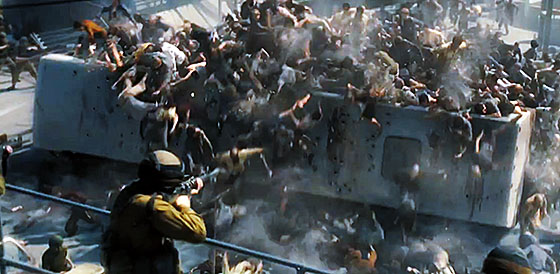
11. Mel’s son, Max Brooks, became an author and screenwriter, his most successful book being the epic tale of a zombie apocalypse: World War Z.


12. Brad Pitt’s production company, Plan B Entertainment, produced the film version of World War Z, as well as Charlie and the Chocolate Factory, starring Johnny Depp.

13. Depp played Hunter S. Thompson in the movie version of Fear and Loathing in Las Vegas.


14. Thompson was a Beat Generation pal of poet Allen Ginsberg.

15. Ginsberg was the focus of a 2013 biopic called Killing Your Darlings, starring Daniel Radcliffe as Ginsberg.


16. A dozen years earlier, Radcliffe skyrocketed to fame by playing a certain wizard by the name of… Harry Potter.


Thursday, July 9, 2015

35 BEST LINES FROM THE BEST SPEECHES


Back in 2008, on their website “The Art of Manliness,” Brett and Kate McCay wrote beautifully about oratory:

“Oratory has been called the highest art for it encompasses all other disciplines. It requires a knowledge of literature, the ability to construct prose, and an ear for rhythm, harmony and musicality. Oratory is not mere speaking, but speech that appeals to our noblest sentiments, animates our souls, stirs passions and emotions, and inspires virtuous action. It is often at its finest when fostered during times of tragedy, pain, crisis, fear, and turmoil. In these situations it serves as a light, a guide to those who cannot themselves make sense of the chaos and look to a leader to point the way.”

The McCays then took it upon themselves to select the 35 greatest examples of oratory in history—based on style, substance, and impact. So of all the addresses and lectures and sermons, of all the orations and exhortations and proclamations, of all the statements of possibility and perseverance, among a cast of historical icons that might include Patton and Napoleon and Vince Lombardi and Billy Graham and William Jennings Bryan and Malcolm X, these were deemed the 35  finest speeches.

It’s a fine list—maybe a little heavy on Ronald Reagan and Teddy Roosevelt, and the inclusion of Jesus Christ had some folks scratching their heads. And since it was posted on “The Art of Manliness,” it is a male-only collection. Still, it is an impressive array of oratory. Given the time, we should all read each one of them in full. But in this installment of the Why Not 100, we offer excerpts—we rank the 35 best parts of the best speeches in human history:

Thursday, July 2, 2015

44 LITERARY MOUNT RUSHMORES


A friend and I have a little game of intellectual tennis that we play, usually when we’re killing time. It’s called “The Mount Rushmore Game,” and basically it just requires us to come up with the four greatest entries in any particular category. For instance (and these are only my opinions, but I’m pretty sure they’re correct), the Mount Rushmore of…

American athletes: Babe Ruth, Muhammad Ali, Michael Jordan, Michael Phelps

Rock bands: Beatles, Rolling Stones, Led Zeppelin, U2

Sitcom characters: Archie Bunker, Hawkeye Pierce, Homer Simpson, The Fonz

See, it’s easy, if never a source of agreement. So I’ve taken it to a literary level. Best songs about writing? Best literary doctors? Best character names? Best autobiography titles? It’s all here—and most of the lists of four have been expanded elsewhere in the WhyNot 100 (Four songs about writing? How about 95).

So here are 44 fun foursomes, all of which could be carved into rock:

1. SONGS ABOUT WRITING:
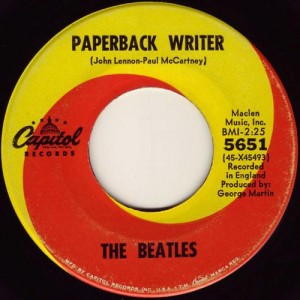
Paperback Writer (The Beatles)
Every Day I Write the Book (Elvis Costello)
Unwritten (Natasha Beddingfield)
I Write the Songs (Barry Manilow)

2. MOVIES ABOUT WRITERS:
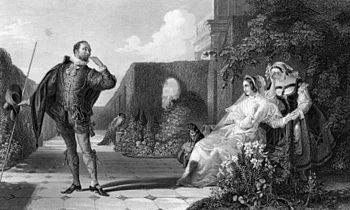
Shakespeare in Love (1998)
Almost Famous (2000)
The Player (1992)
The Shining (1980)

3. DR. SEUSS CHARACTERS:
The Cat in the Hat
Horton the elephant
The Grinch
The Lorax

Wednesday, June 24, 2015

95 SONGS ABOUT WRITING


Did you know that The Doors got their name from The Doors of Perception by Aldous Huxley? Did you know that Led Zeppelin injected J.R.R. Tolkien images into several songs? Or that The Red Hot Chili Peppers wrote a song called Yertle the Turtle? Music and literature have had a symbiotic relationship ever since the ancient bards. So it follows, naturally, that scores of songs in nearly every genre have been written about… writing, about books, about famous literary characters.

We at the Why Not 100 felt it was time to produce a definitive list—or at least as close as possible to one. So here follows a list of 95 pen-to-paper tunes. And it doesn’t even include songs by a death metal band from the Seattle area known as Bloodhag, a band that wrote almost exclusively about writers—from Isaac Asimov and Ray Bradbury to Mary Shelley and Jules Verne. Yes, a death metal band. Which just goes to show you: Don’t judge a book by its cover.

1. Paperback Writer (The Beatles)
2. Everyday I Write the Book (Elvis Costello)
3. Unwritten (Natasha Bedingfield)
4. I Write the Songs (Barry Manilow)
5. Write Your Own Songs (Willie Nelson)
6. Rewrite (Paul Simon)

I’m workin’ on my rewrite, that’s right
Gonna change the ending
Throw away the title
Toss it in the trash
Every minute after midnight
All the time I’m spending
Is just workin’ on my rewrite
Gonna turn it into cash

Monday, June 15, 2015

18 BEST CHILDREN’S BOOKS ABOUT GOLF


The first thing one notices upon entering Ron Muszalski’s ground-floor apartment is not necessarily the assortment of golf posters and prints covering the walls. It isn’t the myriad golf postcards and ashtrays and statuettes, nor even the collection of hats—from Merion, Oakmont, Olympic, Cypress Point—that decorate the single sofa in the tiny one-bedroom rental.

It’s the books. Enough to make a library blush. So many that his apartment seems to be more of a repository than a place of residence. 

Bookshelves line the walls, floor to ceiling, of his bedroom. They crowd the hallway that leads to the bathroom. They block the entrance to a closet and obstruct his view through the living room window, the one looking toward the third fairway of the Pacific Grove Golf Links, the so-called Poor Man’s Pebble Beach on California’s Monterey Peninsula.

Muszalski—who, like a good golf score, is a shade under 80—caddied at Medinah during the Truman Administration. He managed Cambridge Golf Antiques at Pebble Beach for a dozen years. He now survives on Social Security checks, a large portion of which he devotes to his obsession. “I’m a bibliomaniac,” he says proudly, and his golf book collection now numbers more than 6,000 volumes.

He owns the classics, of course—Golf in the Kingdom, Dead Solid Perfect, books by George Plimpton and John Updike and Herbert Warren Wind. But lots of people have those. Muszalski, who meticulously restores old books, prefers to brag about his obscure titles. His collection, which has earned the attention of world-class bibliophile Alastair Johnston, includes titles like Golf and the Stranglehold, 89 Years in a Sandtrap, and Kill It Before It Moves. He owns a 17-page booklet published in Pakistan, a compendium of fatherly advice called Littlest at Golf. His oldest book, Traditions of Edinburgh, was published in 1868.

One of his newest books? Well, that would be mine. Having caught a glimpse of Francis and Eddie, my 32-page picture book about the wondrous 1913 U.S. Open, Muszalski invited me to autograph a copy and wander through his bookshelves. I was honored to have the book join his collection and, frankly, a bit curious about something that had been nagging at me for some time.

Where are all the golf books for kids?