Pages

Wednesday, October 29, 2014

76 BOOKS FOR THE 20TH CENTURY, YEAR BY YEAR


You want to troll for a date? Try a bookstore. Or better yet, read a book.

Have you resolved to learn about the Norman invasion of England? Pick up a copy of David Howarth’s 1066: The Year of the Conquest. The first permanent settlement in the New World? Karen Lange wrote 1607: A New Look at Jamestown. America’s origins? How about David McCullough’s 1776.

You can read 1492: The Year the World Began by Felipe Fernandez-Armesto. But if you want some more historical context, you can also pick up a couple of books by a fellow named Charles C. Mann—1491: New Revelations of the Americas Before Columbus and 1493: Uncovering the New World Columbus Created.

As much as those distant histories fascinate us at the Why Not 100, this is a post about more recent historical accounts. And as much as we love 2001: A Space Odyssey, we’re going to focus on the 20th century.  If you have the time and the inclination, you can give yourself and at-home education by simply journeying through the century one book at a time.

Not every year offers a suitable selection (we decided the year has to be somewhere in the title). On the other hand, some years offer myriad possibilities. There are two books titled 1913, another called 1913: The Eve of War. And there’s 1913: In Search of the World Before the Great War. And 1913: The Year Before the Storm. And so on.

The following is a list of 76 books about 76 years, from novels (i.e. 1984) to biographical studies (Elvis 1956), from broad nonfiction (1949: The First Israelis) to very specific accounts (Stars in the Shadows: The Negro League All-Star Game of 1934), from Dallas 1963 by Bill Minutaglio and Steven L. Davis to October 1964 by David Halberstam.

We’ll start with a novel by Robert Conroy (1901), who also wrote books titled 1862… and 1920… and 1942… and 1945…

1. 1901 by Robert Conroy
2. The 1902 Pittsburgh Pirates: Treachery and Triumph by Ronald T. Waldo
3. The 1903 World Series: The Boston Americans, the Pittsburg Pirates, and the "First Championship of the United States” by Andy Dabilis
4. 1904 St. Louis World's Fair by Michael W. Lemberger and Leigh Michaels


5. 1905 by Leon Trotsky
6. 1906: A Novel by James Dalessandro
7. The Panic of 1907: Lessons Learned from the Market's Perfect Storm by Robert F. Bruner and Sean D. Carr
8. America, 1908: The Dawn of Flight, the Race to the Pole, the Invention of the Model T, and the Making of a Modern Nation by Jim Rasenberger
9. 1911 The First 100 Years by Patrick Sweeney
10. 1912: Wilson, Roosevelt, Taft and Debs—The Election that Changed the Country by James Chace
11. 1913: In Search of the World Before the Great War by Charles Emmerson
12. The Lost History of 1914: Reconsidering the Year the Great War Began by Jack Beatty
13. 1915: The Death of Innocence by Lyn MacDonald
14. The Price of Glory: Verdun 1916 by Sir Alistair Horne
15. 1917: Red Banners, White Mantle by Warren H. Carroll
16. 1918: A Very British Victory by Peter Hart
17. Paris 1919: Six Months That Changed the World by Margaret MacMillan, Richard Holbrooke and Casey Hampton
18. 1920: The Year of the Six Presidents by David Pietrusza
19. 1921: The Yankees, the Giants, and the Battle for Baseball Supremacy in New York by Lyle Spatz, Steve Steinberg and Charles C. Alexander
20. Constellation of Genius: 1922: Modernism Year One by Kevin Jackson
21. In 1926: Living on the Edge of Time by Hans Ulrich Gumbrecht
22. One Summer: America, 1927 by Bill Bryson
23. 1928 by C. S. Alexander
24. The Great Crash 1929 by John Kenneth Galbraith
25. New York 1930: Architecture and Urbanism Between the Two World Wars by Robert A.M. Stern, Gregory F. Gilmartin and Thomas Mellins
26. The 1931 Hastings Bank Job and the Bloody Bandit Trail by Monty McCord
27. The Speakeasies of 1932 by Al Hirschfeld and Gordon Kahn
28. America 1933: The Great Depression, Lorena Hickok, Eleanor Roosevelt, and the Shaping of the New Deal by Michael Golay
29. Stars in the Shadows: The Negro League All-Star Game of 1934 by Charles R. Smith Jr. and Frank Morrison
30. The Boys in the Boat: Nine Americans and Their Epic Quest for Gold at the 1936 Berlin Olympics by Daniel James Brown
31. Moscow, 1937 by Karl Schlögel
32. 1938: Hitler's Gamble by Giles MacDonogh
33. 1939: Countdown to War by Richard Overy
34. 1940: FDR, Willkie, Lindbergh, Hitler-the Election amid the Storm by Susan Dunn
35. December 1941: 31 Days that Changed America and Saved the World by Craig Shirley and Gen. P.X. Kelley

36. 1942: The Year That Tried Men's Souls by Winston Groom
37. The End: Hamburg 1943 by Hans Erich Nossack
38. Warsaw 1944: Hitler, Himmler, and the Warsaw Uprising by Alexandra Richie
39. Year Zero: A History of 1945 by Ian Buruma
40. The Dream Team of 1947 by Arno Paul Niemand
41. 1948: Harry Truman's Improbable Victory and the Year that Transformed America by David Pietrusza
42. 1949: The First Israelis by Tom Segev and Arlen N. Weinstein
43. Accordion War: Korea 1951: Life and Death in a Marine Rifle Company by Charles Hughes
44. Shoot Them Down! - The Flying Saucer Air Wars of 1952 by Jr, Frank Feschino
45. The Coup: 1953, The CIA, and The Roots of Modern U.S.-Iranian Relations by Ervand Abrahamian
46. .721: A History of the 1954 Cleveland Indians by Gary Webster
47. Mississippi Trial, 1955 by Chris Crowe
48. Elvis 1956 by Alfred Wertheimer
49. Little Rock Girl 1957: How a Photograph Changed the Fight for Integration by Shelley Tougas
50. The Best Game Ever: Giants vs. Colts, 1958, and the Birth of the Modern NFL by Mark Bowden
51. Early Wynn, the Go-Go White Sox and the 1959 World Series by Lew Freedman
52. 1960—LBJ vs. JFK vs. Nixon: The Epic Campaign That Forged Three Presidencies by David Pietrusza
53. Freedom Riders: 1961 and the Struggle for Racial Justice by Raymond Arsenault
54. The First America's Team: The 1962 Green Bay Packers by Bob Berghaus
55. Dallas 1963 by Bill Minutaglio and Steven L. Davis
56. October 1964 by David Halberstam
57. The Eve of Destruction: How 1965 Transformed America by James T. Patterson
58. 1967: Israel, the War, and the Year that Transformed the Middle East by Tom Segev
59. 1968: The Year That Rocked the World by Mark Kurlansky
60. 1969: The Year Everything Changed by Rob Kirkpatrick


61. Fire and Rain: The Beatles, Simon and Garfunkel, James Taylor, CSNY, and the Lost Story of 1970 by David Browne
62. 1971: A Global History of the Creation of Bangladesh by Srinath Raghavan
63. 1972: The Summit Series, Canada vs. USSR: Stats, Lies & Videotape: The Untold Story of Hockey's Series of the Century by Richard J Bendell
64. 1973 Nervous Breakdown: Watergate, Warhol, and the Birth of Post-Sixties America by Andreas Killen
65. Game Six: Cincinnati, Boston, and the 1975 World Series: The Triumph of America's Pastime by Mark Frost
66. 1978: Crashed Memories by Ger-I Lewis
67. Strange Rebels: 1979 and the Birth of the 21st Century by Christian Caryl
68. The Boys of Winter: The Untold Story of a Coach, a Dream, and the 1980 U.S. Olympic Hockey Team by Wayne Coffey and Jim Craig
69. The Original 1982 by Lori Carson
70. Holding the Line: Women in the Great Arizona Mine Strike of 1983 by Barbara Kingsolver
71. 1984 by George Orwell
72. 1985 by Anthony Burgess
73. The 1986 Masters: How Jack Nicklaus Roared Back to Win by John Boyette


74. Revolution 1989: The Fall of the Soviet Empire by Victor Sebestyen
75. Twilight: Los Angeles, 1992 by Anna Deavere Smith
76. 1996 by Gloria Naylor


Tuesday, October 21, 2014

49 WITTY TWEETS BY R.L. STINE


R.L. Stine has been called the “Stephen King of children’s literature.” He has written, literally, hundreds of books and has racked up sales in the hundreds of millions. On his Twitter feed, he describes his job as “to terrify kids.” And in fact, he is nearly as prolific at tweeting as he is at writing.

We at the Why Not 100 love an epic book, but we well know that it is also a talent to write pithily. And while horror can be fun, humor can be funnier. It’s why our blog celebrates everything from top headlines from “The Onion” to Steven Wright’s best one-liners.

Twitter, of course, asks for 140 characters of pithy. With that in mind, we scrolled through R.L. Stine’s Twitter feed (@RL_Stine) over a two-month span last year—naturally, the 60 days surrounding Halloween—and came up with this list of our favorites:

1. Oct. 21, 2013: “I’m flattered & honored to have 100,000 followers. I plan to invite you all over for drinks. Keep watching for details.”

2. Nov., 21, 2013: “I see I was passed over again by the Nat’l Book Awards. I thought Son of Slappy stood a chance, but better writers prevailed.”

3. Nov. 4, 2013: “Did you know that monkeys can blush? I didn’t either. What do you think you have to do to make a monkey blush?”

4. Oct. 4, 2013: “Quoth the raven, “What’s up, Doc?” (--Edgar Allen Poe first draft)”

5. Oct. 12, 2013: “Warning: If peg legs freak you out, you’re in trouble tonight. #TheHauntingHour”

6. Nov. 1, 2013: “Good news: The UN has formed a committee to let us know when a deadly asteroid is hurtling toward earth.”

7. Oct. 17, 2013: “Yes, there is a calendar of tattooed librarians. #notmakingthisup”


8. Oct. 21, 2013: “Is your house haunted? A new website will tell you if someone died in your house… Diedinhouse.com works for any address.”

9. Nov. 28, 2013: “Since we don’t believe in killing turkeys, we always have ham, roast beef, and duck. Have a joyous holiday, everyone.”

10. Nov. 3, 2013: “Your nightmare for tonight: Box jellyfish have heads a ft wide & tentacles 550 ft long. If you’re stung, you have 4 minutes to live.”

11. Nov. 20, 2013: “The largest bovine in the world? Glad you asked. I’m sure you’ll agree this is a lot of bull.”

12. Nov. 22, 2013: “In time for your lunch, I thought you might enjoy this selection of delicious monkey brains.”

13. Nov. 11, 2013: “What would YOU do if your dog brought home a human leg? Write a horror movie about it?”

14. Oct. 16, 2013: “Has anyone tried the Pecan Pie flavored Pringles?”

15. Oct. 5, 2013: “Coen Bros.’ “Inside Llewyn Davis”—Best Supporting Performance by a Cat. You’ll see what I mean.”

16. Oct. 14, 2013: “A jack-o-lantern freak or a pie fan? Last week on Long Island, someone stole 600 pumpkins.”

17. Nov. 14, 2013: “Scientists estimate 100 million homeless cats roam the U.S. These cats kill a BILLION birds a year. #natureishorrifying”

18. Oct. 28, 2013: “The Onion writes about Fear Street. Love the comments, especially the people who don’t think I’m real.”

19. Nov. 12, 2013: “A Florida man said his neighbors were mean and wouldn’t drink with him. So he called 911.”

20. Nov. 1, 2013: “A GA man after rescuing his family from their burning house, rushed back into the flames to save his Bud Light. #notmakingthisup”

21. Oct. 16, 2013: “Is the Magic Restroom Café the WORST restaurant ever? For one thing, diners sit on TOILETS. Seriously.”

22. Nov. 4, 2013: “Emergency crews rushed to a 6th grade classroom in Queens, NY when a hazardous smell was reported. Turned out to be Axe body spray.”

23. Oct. 6, 2013: “The most violent, dangerous states in the U.S.? A survey lists the states with most violent crimes per 100,000. The top 5…”

24. Oct. 6, 2013: “…5. S. Carolina 4. New Mexico 3. Alaska 2. Nevada. And the most dangerous state—a surprise, I think—it’s Tennessee.”

25. Nov. 26, 2013: “Don’t believe in ghosts? Boy killed in tornado shows up in photo TWO MONTHS LATER.”


26. Oct. 31, 2013: “News Flash: Aliso Niguel High School in Orange County, CA has banned twerking at school dances.”

27. Oct. 12, 2013: “Something New to Worry About: Ticks may be tiniest, most dangerous creatures on earth.”

28. Oct. 4, 2013: “Here’s a job you might like: NASA is looking for people to lie in bed 24 hours a day for 10 weeks. They want to see what happens…”

29. Oct. 4, 2013: “…to normal people when they do this. The pay for staying in bed for 10 weeks? $12,000. Do you qualify?”

30. Oct. 15, 2013: “I watched This is The End this afternoon. It’s horrible, but it made me laugh a lot.”

And in that same two-month span, I came across these terrific re-tweets from Stine:

31. @MikeJFear: “@RL_Stine since my last name is Fear do I get a special prize?”

32. @juskewitch: “A kiddie pool with a carrot floating in it would look odd to you and me but to a snowman it would be horrifying.”

33. @mayhemll: “I’ve started reading: #Goosebumps books on the train to work in an attempt to meet guys. It’s working. Much obliged @RL_Stine, much obliged.”

34. @maidofstarstuff: “Watching @RL_Stine’s Goosebumps just like it was 20 years ago… except now I have vodka.”

35. @tsokolove: “FUN FACT: I once graced the cover of an @RL_Stine book. I’m the “prom date” killed off in the first chapter…”

36. @KnoxBlevins: “Started reading the Prologue of Red Rain on Amazon… Take my money. Just take it.”

37. @JenCrittenden: “Black Friday presents a conundrum. I like shopping but I also like trampling people.”


38. @WyattBertsch: “when I was a 90’s kid, I pretended The Haunted Mask didn’t scare me. Now, I have no one to act macho for. And I’m still scared.”

39. @AndyRichter: “Watching old episodes of Goosebumps that’s set in Louisiana. Entire cast made the bold choice to speak with Canadian accents.”

40. @Daltongrandon: “Couldn’t find a Goosebumps skateboard on ebay, so I decided to make one, now just need wheels.”

41. @CodyRaines: “@RL_Stine Hey Mr. Stine I’m going to be you for Halloween.”

42. @banubelle: “the scariest books for me has always been the night of the living dummy ones. I threw away most of my toys because of them”

43. @aiahrachel: “Just learned a fabulous and horrifying new expression: “best horse in the glue factory.” Yowza.”

44. @ameliedepoulan: “@RL_Stine Greetings from Peru, sir. Thank you for everything. I had an amazing childhood because of you! :)”

45. @cryptor_chid: “@RL_Stine idea for a story: teenage girl hears her refrigerator breathing and it comes to life and eats her. Based on a true story.”

46. @KinsleyOfficial: “Damn Goosebumps books have me hooked all over again. I’m staying up too late and hiding under the covers like it’s 1995.”

47. @fordhughes: “what advice would u give a young thug with ambitionz as a wridah?”

48. @laurenreeves: “911, what’s your emergency?”
“Hi. Long time listener, first time caller.”
“That’s really funny.”
“Thank you. Anyways, I’m being stabbed.”

49. @emhig: “I just discovered that I remember the plot of every Goosebumps book. @RL_Stine, how can I use this in my daily life?”


Monday, October 13, 2014

93 UNFORGETTABLE ANIMALS IN BOOKS


My friend Kwame Alexander recently won the Newbery Award for his novel The Crossover. But the author/poet also wrote a 2011 picture book, Acoustic Rooster and His Barnyard Band, which tells the story of a jazz-loving rooster who recruits his friends—pianist Duck Ellington, singer Bee Holiday, percussionist piggy Pepe Ernesto Cruz—in an attempt to win a barnyard talent show. There’s some stiff competition from the likes of Mules Davis and Ella Finchgerald, but the riffing rooster comes to realize the power of understanding that you can’t go it alone.

It’s another in a long literary line in which creatures of all sorts capture the imagination of readers, young and old. So we at the Why Not 100 have recruited Kwame Alexander. Since October 14 is generally regarded as Winnie the Pooh’s birthday, we’ve asked him to help us choose the 93 most iconic animal characters in literature.

Monday, October 6, 2014

24 FAMOUS CHARACTERS WHO ALMOST HAD DIFFERENT NAMES


Any writer will tell you: The name has to match the character.

Just take a stroll through another Why Not 100 list—the 70 best character names in literature—and try to re-imagine many of those names. It’s not easy. What if Huckleberry Finn was Nat Bricklebush? What if a Golden Ticket (found inside a Lervin bar) earned you a tour of Larry Lervin’s chocolate factory? What if Hannibal Lechter was Ernest Munch?

Literature is filled with iconic characters whose names have become so part of our collective psyche that we can’t quite imagine them being anything else. Count Dracula. Sherlock Holmes. Ebenezer Scrooge. Gandalf the Grey.

But then, we didn’t see the first drafts.

Here are two-dozen classic characters whose iconic names were not the originals:

1. Count Dracula

Originally, Bram Stoker called his legendary vampire “Count Waympr.” But then he came across a historical account of Vlad II of Wallachia, otherwise known as Vlad Dracul. Besides the literary impact, fans of Count Chocula breakfast cereal are grateful.

2. Sherlock Holmes

Sherringford was an early choice by Sir Arthur Conan Doyle, which would have let to a whole generation of boys saying, “No shit, Sherringford.”

3. Dr. Watson

Fascinating factoid: Literature’s Sherlock Holmes never actually uttered the phrase most attributed to him. He said, “Elementary!” And he said, “My dear Watson.” But never in the same sentence until a 1929 film called The Return of Sherlock Holmes. But imagine this: “Elementary, my dear Sacker.” Holmes’s friend was nearly named Ormond Sacker.

4. Scarlett O’Hara

Legend has it that just before Gone with the Wind went to print, Margaret Mitchell changed her main character’s name from Pansy to Scarlett. Maybe she became aware of the need when she reexamined the scenes between the maid Prissy and her mistress Pansy.

5. Little Orphan Annie

Speaking of which… cartoonist Harold Gray’s original pitch was about exploring explore the adventures of a little orphan boy named Otto, complete with adorable curls. But newspaper publisher Joseph Medill Patterson supposedly responded (remember this was the 1920s), “The kid looks like a pansy to me. Put a skirt on him, and we’ll call it ‘Little Orphan Annie.’”


6. Hermione Granger

You’re creating a character, a girl who is smart and serious and acutely aware of the dangers that surround her. So what do you name her? Hermione Puckle. Realizing that the surname “didn’t suit her at all,” Joanne Rowling smartly renamed her. Interestingly, continuing an odd theme here, Hermione’s foil at Hogwarts is Pansy Parkinson.

7. Nancy Drew

The original author’s name is a pseudonym itself—Carolyn Keene being the combined creation of sisters Benson and Harriet Adams. As for their literary creation, the girl detective was almost named Diane Dare, Helen Hale, even Stella Strong. Why they settled on Nancy Drew is a bit of a mystery.

8. Holly Golightly

Truman Capote’s lyrically named protagonist from Breakfast at Tiffany’s had a decidedly non-musical moniker in early drafts: Connie Gustafson.

9. Philip Marlowe

“Mallory” was the original choice, presumably an homage by Raymond Chandler to English author Sir Thomas Malory. But his wife thought “Marlowe” sounded more hard-boiled. She was right.

10. John Falstaff

He appears in three Shakespearean plays, this corpulent comic foil of a knight. But the Immortal Bard originally wrote him as “John Oldcastle”—until a fellow named Lord Cobham, descendant of a real fellow named Sir John Oldcastle—complained.

11. Lucy Frost

She was Charlotte Bronte protagonist in Villette, but she was first christened “Lucy Snowe.” And Bronte apparently wished she had kept the original. “I rather regretted the name change,” she later admitted. “A cold name she must have.”

12. Susan, Edmund and Lucy Pevensie

The younger siblings of Peter Pevensie, High King of Narnia, were called “Ann” and “Martin” and “Rose” in an early version of The Lion, the Witch and the Wardrobe.

13. Charlotte A. Cavatica

No, it wouldn’t have changed the title of Charlotte’s Web, but E.B. White originally imagined her as a Grey Cross spider (Epeira sclopetaria), so she was known as “Charlotte Epeira.” But this perfect pig publicist was actually a barn spider—Araneus cavaticus. So E.B. White humbly changed the eight-legged one’s last name.

14. Artemis Fowl

Eoin Colfer named the title character of his Artemis Fowl books after Artemis (the goddess of archery and hunting) and Fowler (an Irish name that sounded like “foul.” Said Colfer, “It’s the nasty hunter basically.” But his initial name was “Archimedes.” Said Colfer, “I wanted a classic Greek name that would have an air of intelligence and genius about it. But I thought people would think it’s a book about Archimedes.”

15. Marvin the Paranoid Android

My son Luke loves A Hitchhiker’s Guide to the Galaxy, his favorite character being the robot afflicted with severe depression. But author Douglas Adams originally wanted to name the character after a rather socially inept friend of his named Andrew Marshall. So it would have been “Marshall the Paranoid Android.” Don’t tell the android. It’ll just upset him.

16. Tiny Tim

This one is likely legend misread as fact. It has been claimed that Charles Dickens considered a few other names for his sickly child in A Christmas Carol. “Little Larry” was one. Not too bad. “Small Sam” was another. Meh. “Puny Pete was a third. Ugh. Then again, was anyone in the 19th century really known as Larry?


But wait, there’s more. We have arrived at the J.R.R. Tolkien portion of our list.

17. Beorn

The man-bear of The Hobbit originally had a name that meant “bear” in Russian—“Medwed.”

18. Smaug

The great and terrible dragon of the Lonely Mountain was difficult to kill. His original name was difficult to say—“Pryftan.”

19. Aragorn (aka Strider)

It would have been a lot tougher for Viggo Mortensen to look quite so heroic in The Lord of the Rings trilogy if the returned king’s name had been the original—“Peregrin Boffin.” Even his nickname was originally Trotter.

20. Pippin Took

Tolkien eventually gave him the Peregrin moniker. But this hobbit was originally “Odo.”

21. Merry Brandybuck.

Meriadoc was the long version in the books, and it sounds a bit like the original—believe it or not, “Marmaduke.”


22. Frodo Baggins

He carried a dark and dangerous burden. He was the courageous young fellow on whom the residents of Middle Earth pinned their final hopes. But the character’s original name makes him sound like something from Dr. Seuss—“Bingo Bolger-Baggins.”

23. Gandalf the Grey

Notes written in pencil on early drafts of The Hobbit show that the great wizard was originally “Bladorthin the Grey.” Yup. Eventually, Bladorthin became merely the name of a long-dead king mentioned in passing only once in Tolkien’s writings.

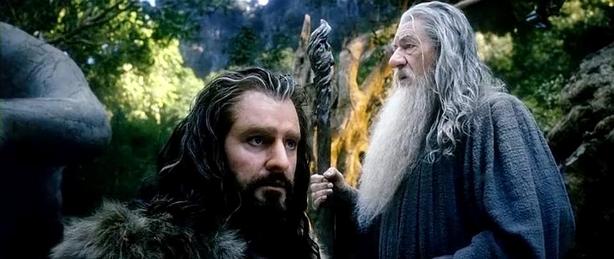
24. Thorin Oakenshield

Believe it or not, the dwarven king was originally named “Gandalf.”


Saturday, September 27, 2014

84 CLASSIC MOVIES THAT WERE BOOKS FIRST


Not long ago, I was having a conversation with a friend about favorite movies, and we were talking about The Princess Bride. I don’t think I know anybody who doesn’t love that movie. It’s almost perfect. Anyway, I mentioned that William Goldman and I happened to attend the same high school and summer camp (albeit about 37 years apart).

“William Goldman,” I said. “You know, the guy who wrote the book.”

My friend replied, “It was a book?”

Yes, it seems that mainstream films sometimes erase memories of literature. So I’m going to remedy that by ranking the 84 best movies that were books first. It’s a bit of a challenge, mostly due to an embarrassment of riches. From 12 Angry Men to Apollo 13, from The Graduate to The Player to The Firm, Hollywood has been poaching literature for decades.

Friday, September 19, 2014

6 KIDS WHO UNEXPECTEDLY IMPACTED SPORTS


On this day 101 years ago – Sept. 19, 1913—an unknown amateur golfer made an 18-foot putt that transformed the sport.

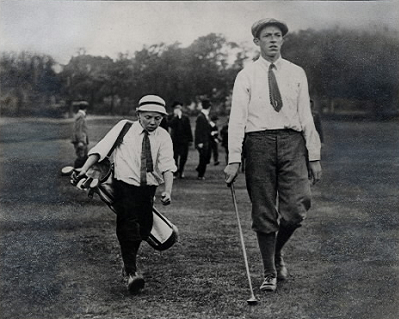
My motivation for writing the children’s book FRANCIS AND EDDIE (Why Not Books, 2013) didn’t necessarily come from the fact that I think it ranks as perhaps the greatest underdog feat in championship sports—the tale of Francis Ouimet beating the best golfers in the world to win the U.S. Open. It wasn’t even because it struck me as the ultimate local-boy-makes-good story—a kid who literally lived across the street from the golf course in Brookline, Massachusetts, right near the 17th hole. He taught himself to play be sneaking onto the course in the dark and the rain, taught himself so well that he qualified to compete in the national championship, then sank an ultra-clutch putt on that very 17th green to shock the world and catapult golf onto the front pages for the first time.

No, that’s not why either. It’s because of Eddie Lowery.

Ouimet’s prospects were so dim that his regular caddie opted instead to carry the bag of a French pro, figuring he could share in some prize money. During a practice round, a boy named Jack Lowery had been an able replacement, but only minutes before Francis’s scheduled tee time for his Tuesday qualifying round, Jack was nowhere to be found. That’s when a tiny fellow, just four feet tall, came running up to the practice green and offered five words that would launch an iconic partnership: “I could caddie for you.”

Eddie Lowery was Jack’s little brother. He was skipping school. He was ten years old. “My bag’s as big as you are,” said Ouimet, but it could be that the golfer saw a bit of himself in the boy, an underestimated kid reaching for respectability. Or, perhaps he figured he had nothing to lose. “All right then, Eddie, let’s go,” he said. “Just please call me Francis.” And that is how, over the next several days, a child stood at the center of this extraordinary athletic saga.

There have been a great many precocious athletes. Joe Nuxhall pitched in the major leagues, for the 1944 Cincinnati Reds, at age 15. In 1976, 14-year-old Olympic gymnast Nadia Comaneci became an international sensation.  In August 2013, when she was still nearly two months short of her 11th birthday, California native Lucy Li became the youngest person ever to quality and compete in the USGA Women’s Amateur golf championship.

But that’s not what I’m celebrating here.

There have been a good many times, too, when kids have influenced play on the courts or fields. At the 2011 French Open, for instance, a ball boy mistakenly ran onto the court during a point, thinking the point was already over. At the same time, Victor Troicki was completing an overhead smash against Andy Murray, but the point had to be replayed. And Murray won it. But Troicki still won the game. So nothing really changed.

Sometimes, however, the unexpected appearance of a kid—as a replacement, a fan, an inspiration—has made all the difference, occasionally even a historic difference. So here is a six-pack of small wonders, starting with the earliest (and youngest):

1. Anonymous gold medalist (rowing, 1900, age 7)

One of the stranger chapters in Olympic history occurred during the infancy of the modern Games at the 1900 Summer Olympics in Paris. It happened during a rowing event called coxed pairs, which features boats with two rowers and one coxswain (the lightweight person who sits in the boat and directs the rowers). Before the finals of the event, the team from Holland decided that the coxswain they normally used was too heavy. So legend has it that the decision-makers opted to replace him with a young French boy that they plucked from the crowd. Naturally, it wouldn’t even be close to allowable these days. The boy, whose name has been lost to history, may have been as young as seven years old. But he and his new teammates won the gold medal.

2. Eddie Lowery (golf, 1913, age 10)

At the 1913 U.S. Open, they made for an odd-looking pair, Francis Ouimet and Eddie Lowery. The golfer was lanky and loose-limbed; the caddie was small even for his age, ruddy-cheeked, with a hint of mischief in eyes peeking out from beneath a white bucket hat. By the end of the tournament, they would be dressed almost exactly alike, walking side by side, each bolstering the other. Francis made Eddie feel important, and Eddie made Francis feel at ease amid the maelstrom of world-class competition, even when they later spotted a gaggle of dignitaries surrounding a particularly corpulent fellow in the gallery. All of the anxiety that accompanies swinging a golf club in front of former President William Howard Taft is diminished when your caddie asks, “Who’s the big fat guy? He looks kinda familiar, doesn’t he?”

As Mark Frost, author of TheGreatest Game Ever Played, put it, “It was almost as if somebody rubbed a lamp and said, ‘Give me someone who will give Francis confidence.’ And the perfect person shows up. He just happens to be half of Francis’s size.” Early in their first round together, Francis turned to Eddie and said, “I think you and I are going to be good friends.” Their friendship endured for more than half a century.

3. Johnny Sylvester  (baseball, 1926, age 11)

During the 1926 World Series, 11-year-old John Dale Sylvester asked Babe Ruth to autograph a baseball. Sylvester, a fine ballplayer himself and a diehard Yankees fan asked the favor of his idol from his hospital bed (a horse had kicked him in the head, leading to life-threatening brain inflammation). On a ball signed by every Yankee, Ruth wrote, with somewhat befuddling grammar, “I’ll knock a homer for Wednesday’s game.”

He didn’t. He hit three in Game 4, an unprecedented feat. Was Ruth motivated by the promise? Who knows? The Yanks actually wound up losing the series, the last out coming when Ruth was thrown out attempting to steal second base.

As for Sylvester (who lived to the age of 74 and became a business executive), he found himself with some pretty sweet possessions, including an autographed football from Red Grange and a tennis racket from Bill Tilden (sad irony: Tilden was later revealed to be a pedophile). All three collectibles went up for auction in on February 6, 2014, which would have been—no coincidence—Babe Ruth’s 119th birthday.

4. Joe Relford (baseball, 1952, age 12)

It used to be that when a baseball team was losing badly, frustrated fans would get a kick out of yelling, “Put in the batboy!” But on July 19, 1952, Charlie Ridgeway, the manager of the Class D Georgia State League’s Fitzgerald Pioneers, actually did it. With his team down 13-0, batboy Joe Relford stepped up to the plate as a pinch-hitter. He grounded sharply to third to end the inning, but he followed that with an excellent defensive play in centerfield. After the game, fans ran onto the field to congratulate him, stuffing his pockets with money. Sadly, however, both the umpire and the batboy lost their jobs that day, and the manager was fined and suspended—not because Relford was 12, but because he was the first African-American player in the league.

5. Jeffrey Maier (baseball, 1996, age 12)

Game 1 of the American League Championship Series—October 9, 1996, Yankee Stadium. Bottom of the eighth inning, and the Baltimore Orioles led 4-3. Young New York shortstop Derek Jeter stepped to the plate and clubbed a long fly ball to deep right field. Baltimore right fielder Tony Tarasco camped under it, ready to catch the near-miss. Except that’s when 12-year-old Jeffrey Maier reached over the outfield fence and plucked the ball into the bleachers. “And what happens here?” shouted announcer Bob Costas. “The contention by Tarasco is that the ball is descending, and the fan touches it. He’s right! He’s right!”

Replays confirmed that the ball likely would have been caught by Tarasco, but umpire Richie Garcia ruled it a game-tying home run. Maier was lifted on to the shoulders of fans in right field. “Certainly, he’s affected the course of the game,” said Costas, to which color commentator Bob Uecker added, “And maybe the Series!” Indeed, the Yankees won the game in extra innings and went on to win the World Series, the first of four New York titles in five years. Maier went on to play college baseball, becoming the all-time hits leader for the University of Connecticut. But when he was 12, one headline read: THE KID CATCHES ON AS NEW YANKEE HERO.

6. Nick Gilbert (basketball, 2011, age 13)

Nick Gilbert suffers from neurofibromatosis, a nerve order that causes tumors to sprout on a whim. But his father, Dan, is the owner of the NBA’s Cleveland Cavaliers, and he—along with most of the fans in Cleveland—think Nick is one of the luckiest kids on the planet. Or at least a good luck charm. In 2011 the 13-year-old stood there, his eyes wide through his thick lenses, and represented the Cavs at the NBA draft lottery. Cleveland had a 2.8 percent chance of drawing the top pick. Yet that’s exactly what happened. Two years later, with Nick again serving as the face of the franchise, they had a 15.6 percent chance of repeating the feat. Once again, as Nick’s serious look contradicted the vibe of his maroon bowtie, Cleveland again drew the top pick. Did Nick actually actively do anything to make this so? Well, no. But as one sports columnist put it, “Certainly, there’s no skill involved when it comes to hunching over a team-addled podium while waiting for your name to be called. With Nick Gilbert, it’s about presence.”


Friday, September 12, 2014

34 UNFORGETTABLE ISLAND SETTINGS


A few years ago, author Judith Schalansky published a widely praised book called The Atlas of Remote Islands. She pairs full-color cartographic drawings with compelling narratives about lore and legend and science and history, the aim being to celebrate the cartographic unknown.

That’s one way of exploring uninhabited or sparsely populated blips of land amid endless seas. Another way is to read some classic fiction.

As setting goes, every island is brimming with possibilities that affect plot, character, mood. It is isolation and introspection, seclusion with no place to hide, a place that seems both manageable and unfathomably mysterious. It is new life or a slow death, terror or revelation. Or sometimes all at once—just re-read Lord of the Flies, which was published 60 years ago this month.

So it is no wonder that many renowned authors have taken their readers to remote islands for some of their most famous stories—authors like Jules Verne, Robert Louis Stevenson, H.G. Wells, Virginia Wolff, Agatha Christie, and Michael Crichton. And they’ve stranded iconic characters like Long John Silver and Robinson Crusoe, Piggy and Prospero. Island protagonists (and antagonists) have been shipwreck survivors, prison escapees, accidental adoptees, treasure hunters, exiled rulers, explorers, mad scientists, and murder suspects.

So let’s take a trip to some uncharted isles. No Hawaii here (sorry, James Michener). No United Kingdom (sorry, Bill Bryson). Jamaica is by no means overlooked and secluded, so we’ll steer wide of Jean Rhys’s Wide Sargasso Sea. No Long Island (sayonara, Gatsby).For that matter, no island of Manhattan.

No, here we celebrate remote (usually) spits of land—the kind that become lead characters in the story. Agatha Christies A Caribbean Vacation doesn’t count. But Indian Island from And Then There Were None? You bet. Any good island explorer seeks out the unusual—or at least the legendary. So break open a coconut and have a seat for this installment of the Why Not 100—34 unforgettable island settings:

1. The Island of Despair

Daniel Defoe’s Robinson Crusoe is the shipwrecked tale that inspired all others. There’s even a genre of “desert island story” known as a Robinsonade. Crusoe is stranded with two cats and a dog on what he calls the Island of Despair (probably based on the Caribbean island of Tobago). He excavates a cave, builds a canoe, hunts, grows crops, makes pottery, fends of mutineers and cannibals, and rescues a fellow whom he calls Friday. The first edition, published in 1719, actually credited the title character as the author, and many readers believed it was a travelogue.

2. Treasure Island

Robert Louis Stevenson left us with iconic characters—Long John Silver, Billy Bones, Ben Gunn. And an iconic scenario—an island bearing lost pirate treasure. Captain Flint calls it Skeleton Island. To protagonist Jim Hawkins (and to Stevenson for a book title), it’s Treasure Island. The duality symbolizes the risk and reward of the adventure.