Monday, October 13, 2014
93 UNFORGETTABLE ANIMALS IN BOOKS
My friend Kwame Alexander recently won the Newbery Award for his novel The Crossover. But the author/poet also wrote a 2011 picture book, Acoustic Rooster and His Barnyard Band, which tells the story of a jazz-loving rooster who recruits his friends—pianist Duck Ellington, singer Bee Holiday, percussionist piggy Pepe Ernesto Cruz—in an attempt to win a barnyard talent show. There’s some stiff competition from the likes of Mules Davis and Ella Finchgerald, but the riffing rooster comes to realize the power of understanding that you can’t go it alone.
It’s another in a long literary line in which creatures of all sorts capture the imagination of readers, young and old. So we at the Why Not 100 have recruited Kwame Alexander. Since October 14 is generally regarded as Winnie the Pooh’s birthday, we’ve asked him to help us choose the 93 most iconic animal characters in literature.
Monday, October 6, 2014
24 FAMOUS CHARACTERS WHO ALMOST HAD DIFFERENT NAMES
Any writer will tell you: The name has to match the character.
Just take a stroll through another Why Not 100 list—the 70 best character names in literature—and try to re-imagine many of those names. It’s not easy. What if Huckleberry Finn was Nat Bricklebush? What if a Golden Ticket (found inside a Lervin bar) earned you a tour of Larry Lervin’s chocolate factory? What if Hannibal Lechter was Ernest Munch?
Literature is filled with iconic characters whose names have become so part of our collective psyche that we can’t quite imagine them being anything else. Count Dracula. Sherlock Holmes. Ebenezer Scrooge. Gandalf the Grey.
But then, we didn’t see the first drafts.
Here are two-dozen classic characters whose iconic names were not the originals:
1. Count Dracula
Originally, Bram Stoker called his legendary vampire “Count Waympr.” But then he came across a historical account of Vlad II of Wallachia, otherwise known as Vlad Dracul. Besides the literary impact, fans of Count Chocula breakfast cereal are grateful.
2. Sherlock Holmes
Sherringford was an early choice by Sir Arthur Conan Doyle, which would have let to a whole generation of boys saying, “No shit, Sherringford.”
3. Dr. Watson
Fascinating factoid: Literature’s Sherlock Holmes never actually uttered the phrase most attributed to him. He said, “Elementary!” And he said, “My dear Watson.” But never in the same sentence until a 1929 film called The Return of Sherlock Holmes. But imagine this: “Elementary, my dear Sacker.” Holmes’s friend was nearly named Ormond Sacker.
4. Scarlett O’Hara
Legend has it that just before Gone with the Wind went to print, Margaret Mitchell changed her main character’s name from Pansy to Scarlett. Maybe she became aware of the need when she reexamined the scenes between the maid Prissy and her mistress Pansy.
5. Little Orphan Annie
Speaking of which… cartoonist Harold Gray’s original pitch was about exploring explore the adventures of a little orphan boy named Otto, complete with adorable curls. But newspaper publisher Joseph Medill Patterson supposedly responded (remember this was the 1920s), “The kid looks like a pansy to me. Put a skirt on him, and we’ll call it ‘Little Orphan Annie.’”
6. Hermione Granger
You’re creating a character, a girl who is smart and serious and acutely aware of the dangers that surround her. So what do you name her? Hermione Puckle. Realizing that the surname “didn’t suit her at all,” Joanne Rowling smartly renamed her. Interestingly, continuing an odd theme here, Hermione’s foil at Hogwarts is Pansy Parkinson.
7. Nancy Drew
The original author’s name is a pseudonym itself—Carolyn Keene being the combined creation of sisters Benson and Harriet Adams. As for their literary creation, the girl detective was almost named Diane Dare, Helen Hale, even Stella Strong. Why they settled on Nancy Drew is a bit of a mystery.
8. Holly Golightly
Truman Capote’s lyrically named protagonist from Breakfast at Tiffany’s had a decidedly non-musical moniker in early drafts: Connie Gustafson.
9. Philip Marlowe
“Mallory” was the original choice, presumably an homage by Raymond Chandler to English author Sir Thomas Malory. But his wife thought “Marlowe” sounded more hard-boiled. She was right.
10. John Falstaff
He appears in three Shakespearean plays, this corpulent comic foil of a knight. But the Immortal Bard originally wrote him as “John Oldcastle”—until a fellow named Lord Cobham, descendant of a real fellow named Sir John Oldcastle—complained.
11. Lucy Frost
She was Charlotte Bronte protagonist in Villette, but she was first christened “Lucy Snowe.” And Bronte apparently wished she had kept the original. “I rather regretted the name change,” she later admitted. “A cold name she must have.”
12. Susan, Edmund and Lucy Pevensie
The younger siblings of Peter Pevensie, High King of Narnia, were called “Ann” and “Martin” and “Rose” in an early version of The Lion, the Witch and the Wardrobe.
13. Charlotte A. Cavatica
No, it wouldn’t have changed the title of Charlotte’s Web, but E.B. White originally imagined her as a Grey Cross spider (Epeira sclopetaria), so she was known as “Charlotte Epeira.” But this perfect pig publicist was actually a barn spider—Araneus cavaticus. So E.B. White humbly changed the eight-legged one’s last name.
14. Artemis Fowl
Eoin Colfer named the title character of his Artemis Fowl books after Artemis (the goddess of archery and hunting) and Fowler (an Irish name that sounded like “foul.” Said Colfer, “It’s the nasty hunter basically.” But his initial name was “Archimedes.” Said Colfer, “I wanted a classic Greek name that would have an air of intelligence and genius about it. But I thought people would think it’s a book about Archimedes.”
15. Marvin the Paranoid Android
My son Luke loves A Hitchhiker’s Guide to the Galaxy, his favorite character being the robot afflicted with severe depression. But author Douglas Adams originally wanted to name the character after a rather socially inept friend of his named Andrew Marshall. So it would have been “Marshall the Paranoid Android.” Don’t tell the android. It’ll just upset him.
16. Tiny Tim
This one is likely legend misread as fact. It has been claimed that Charles Dickens considered a few other names for his sickly child in A Christmas Carol. “Little Larry” was one. Not too bad. “Small Sam” was another. Meh. “Puny Pete was a third. Ugh. Then again, was anyone in the 19th century really known as Larry?
But wait, there’s more. We have arrived at the J.R.R. Tolkien portion of our list.
17. Beorn
The man-bear of The Hobbit originally had a name that meant “bear” in Russian—“Medwed.”
18. Smaug
The great and terrible dragon of the Lonely Mountain was difficult to kill. His original name was difficult to say—“Pryftan.”
19. Aragorn (aka Strider)
It would have been a lot tougher for Viggo Mortensen to look quite so heroic in The Lord of the Rings trilogy if the returned king’s name had been the original—“Peregrin Boffin.” Even his nickname was originally Trotter.
20. Pippin Took
Tolkien eventually gave him the Peregrin moniker. But this hobbit was originally “Odo.”
21. Merry Brandybuck.
Meriadoc was the long version in the books, and it sounds a bit like the original—believe it or not, “Marmaduke.”
22. Frodo Baggins
He carried a dark and dangerous burden. He was the courageous young fellow on whom the residents of Middle Earth pinned their final hopes. But the character’s original name makes him sound like something from Dr. Seuss—“Bingo Bolger-Baggins.”
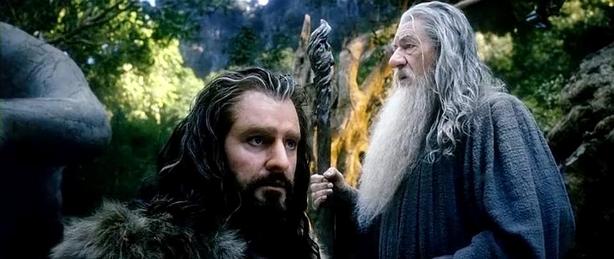
23. Gandalf the Grey
Notes written in pencil on early drafts of The Hobbit show that the great wizard was originally “Bladorthin the Grey.” Yup. Eventually, Bladorthin became merely the name of a long-dead king mentioned in passing only once in Tolkien’s writings.
24. Thorin Oakenshield
Believe it or not, the dwarven king was originally named “Gandalf.”
Saturday, September 27, 2014
84 CLASSIC MOVIES THAT WERE BOOKS FIRST
Not long ago, I was having a conversation with a friend
about favorite movies, and we were talking about The Princess Bride. I don’t think I know anybody who doesn’t love
that movie. It’s almost perfect. Anyway, I mentioned that William Goldman and I
happened to attend the same high school and summer camp (albeit about 37 years
apart).
“William Goldman,” I said. “You know, the guy who wrote the
book.”
My friend replied, “It was a book?”
Yes, it seems that mainstream films sometimes erase memories
of literature. So I’m going to remedy that by ranking the 84 best movies that
were books first. It’s a bit of a challenge, mostly due to an embarrassment of
riches. From 12 Angry Men to Apollo 13, from The Graduate to The Player to
The Firm, Hollywood has been poaching
literature for decades.
Friday, September 19, 2014
6 KIDS WHO UNEXPECTEDLY IMPACTED SPORTS
On this day 101 years ago – Sept.
19, 1913—an unknown amateur golfer made an 18-foot putt that transformed the
sport.
My motivation for writing the
children’s book FRANCIS AND EDDIE (Why Not Books, 2013) didn’t necessarily come
from the fact that I think it ranks as perhaps the greatest underdog feat in
championship sports—the tale of Francis Ouimet beating the best golfers in the
world to win the U.S. Open. It wasn’t even because it struck me as the ultimate
local-boy-makes-good story—a kid who literally lived across the street from the
golf course in Brookline, Massachusetts, right near the 17th hole.
He taught himself to play be sneaking onto the course in the dark and the rain,
taught himself so well that he qualified to compete in the national
championship, then sank an ultra-clutch putt on that very 17th green to shock the world and catapult
golf onto the front pages for the first time.
No, that’s not why either. It’s
because of Eddie Lowery.
Ouimet’s prospects were so dim
that his regular caddie opted instead to carry the bag of a French pro,
figuring he could share in some prize money. During a practice round, a boy named
Jack Lowery had been an able replacement, but only minutes before Francis’s
scheduled tee time for his Tuesday qualifying round, Jack was nowhere to be
found. That’s when a tiny fellow, just four feet tall, came running up to the
practice green and offered five words that would launch an iconic partnership:
“I could caddie for you.”
Eddie Lowery was Jack’s little
brother. He was skipping school. He was ten years old. “My bag’s as big as you
are,” said Ouimet, but it could be that the golfer saw a bit of himself in the
boy, an underestimated kid reaching for respectability. Or, perhaps he figured
he had nothing to lose. “All right then, Eddie, let’s go,” he said. “Just
please call me Francis.” And that is how, over the next several days, a child
stood at the center of this extraordinary athletic saga.
There have been a great many
precocious athletes. Joe Nuxhall pitched in the major leagues, for the 1944
Cincinnati Reds, at age 15. In 1976, 14-year-old Olympic gymnast Nadia Comaneci
became an international sensation. In
August 2013, when she was still nearly two months short of her 11th
birthday, California native Lucy Li became the youngest person ever to quality
and compete in the USGA Women’s Amateur golf championship.
But that’s not what I’m celebrating
here.
There have been a good many times,
too, when kids have influenced play on the courts or fields. At the 2011 French
Open, for instance, a ball boy mistakenly ran onto the court during a point,
thinking the point was already over. At the same time, Victor Troicki was
completing an overhead smash against Andy Murray, but the point had to be
replayed. And Murray won it. But Troicki still won the game. So nothing really
changed.
Sometimes, however, the unexpected
appearance of a kid—as a replacement, a fan, an inspiration—has made all the
difference, occasionally even a historic difference. So here is a six-pack of
small wonders, starting with the earliest (and youngest):
1. Anonymous gold medalist (rowing, 1900, age
7)
One of the stranger chapters in
Olympic history occurred during the infancy of the modern Games at the 1900
Summer Olympics in Paris. It happened during a rowing event called coxed pairs,
which features boats with two rowers and one coxswain (the lightweight person
who sits in the boat and directs the rowers). Before the finals of the event,
the team from Holland decided that the coxswain they normally used was too
heavy. So legend has it that the decision-makers opted to replace him with a
young French boy that they plucked from the crowd. Naturally, it wouldn’t even
be close to allowable these days. The boy, whose name has been lost to history,
may have been as young as seven years old. But he and his new teammates won the
gold medal.
2. Eddie Lowery (golf, 1913, age 10)
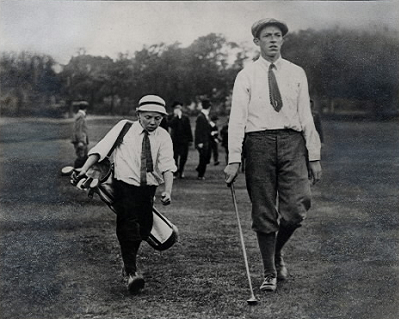
At the 1913 U.S. Open, they made for an odd-looking pair, Francis Ouimet and
Eddie Lowery. The golfer was lanky and loose-limbed; the caddie was small even
for his age, ruddy-cheeked, with a hint of mischief in eyes peeking out from
beneath a white bucket hat. By the end of the tournament, they would be dressed
almost exactly alike, walking side by side, each bolstering the other. Francis
made Eddie feel important, and Eddie made Francis feel at ease amid the
maelstrom of world-class competition, even when they later spotted a gaggle of
dignitaries surrounding a particularly corpulent fellow in the gallery. All of
the anxiety that accompanies swinging a golf club in front of former President
William Howard Taft is diminished when your caddie asks, “Who’s the big fat
guy? He looks kinda familiar, doesn’t he?”
As Mark Frost, author of TheGreatest Game Ever Played, put it, “It was almost as if somebody rubbed a
lamp and said, ‘Give me someone who will give Francis confidence.’ And the
perfect person shows up. He just happens to be half of Francis’s size.” Early
in their first round together, Francis turned to Eddie and said, “I think you
and I are going to be good friends.” Their friendship endured for more than
half a century.
3. Johnny Sylvester (baseball, 1926, age 11)
During the 1926 World Series, 11-year-old John Dale Sylvester asked Babe
Ruth to autograph a baseball. Sylvester, a fine ballplayer himself and a
diehard Yankees fan asked the favor of his idol from his hospital bed (a horse
had kicked him in the head, leading to life-threatening brain inflammation). On
a ball signed by every Yankee, Ruth wrote, with somewhat befuddling grammar, “I’ll
knock a homer for Wednesday’s game.”
He didn’t. He hit three in Game 4, an unprecedented feat. Was Ruth
motivated by the promise? Who knows? The Yanks actually wound up losing the
series, the last out coming when Ruth was thrown out attempting to steal second
base.
As for Sylvester (who lived to the age of 74 and became a business
executive), he found himself with some pretty sweet possessions, including an
autographed football from Red Grange and a tennis racket from Bill Tilden (sad
irony: Tilden was later revealed to be a pedophile). All three collectibles
went up for auction in on February 6, 2014, which would have been—no
coincidence—Babe Ruth’s 119th birthday.
4. Joe Relford (baseball, 1952, age 12)
It used to be that when a baseball
team was losing badly, frustrated fans would get a kick out of yelling, “Put in
the batboy!” But on July 19, 1952, Charlie Ridgeway, the manager of the Class D
Georgia State League’s Fitzgerald Pioneers, actually did it. With his team down
13-0, batboy Joe Relford stepped up to the plate as a pinch-hitter. He grounded
sharply to third to end the inning, but he followed that with an excellent defensive
play in centerfield. After the game, fans ran onto the field to congratulate
him, stuffing his pockets with money. Sadly, however, both the umpire and the
batboy lost their jobs that day, and the manager was fined and suspended—not
because Relford was 12, but because he was the first African-American player in
the league.
5. Jeffrey Maier (baseball, 1996, age 12)
Game 1 of the American League
Championship Series—October 9, 1996, Yankee Stadium. Bottom of the eighth
inning, and the Baltimore Orioles led 4-3. Young New York shortstop Derek Jeter
stepped to the plate and clubbed a long fly ball to deep right field. Baltimore
right fielder Tony Tarasco camped under it, ready to catch the near-miss.
Except that’s when 12-year-old Jeffrey Maier reached over the outfield fence
and plucked the ball into the bleachers. “And what happens here?” shouted
announcer Bob Costas. “The contention by Tarasco is that the ball is
descending, and the fan touches it. He’s right! He’s right!”
Replays confirmed that the ball likely
would have been caught by Tarasco, but umpire Richie Garcia ruled it a
game-tying home run. Maier was lifted on to the shoulders of fans in right
field. “Certainly, he’s affected the course of the game,” said Costas, to which
color commentator Bob Uecker added, “And maybe the Series!” Indeed, the Yankees
won the game in extra innings and went on to win the World Series, the first of
four New York titles in five years. Maier went on to play college baseball,
becoming the all-time hits leader for the University of Connecticut. But when
he was 12, one headline read: THE KID CATCHES ON AS NEW YANKEE HERO.
6. Nick Gilbert (basketball, 2011, age 13)
Nick Gilbert suffers from
neurofibromatosis, a nerve order that causes tumors to sprout on a whim. But
his father, Dan, is the owner of the NBA’s Cleveland Cavaliers, and he—along
with most of the fans in Cleveland—think Nick is one of the luckiest kids on
the planet. Or at least a good luck charm. In 2011 the 13-year-old stood there,
his eyes wide through his thick lenses, and represented the Cavs at the NBA
draft lottery. Cleveland had a 2.8 percent chance of drawing the top pick. Yet
that’s exactly what happened. Two years later, with Nick again serving as the
face of the franchise, they had a 15.6 percent chance of repeating the feat.
Once again, as Nick’s serious look contradicted the vibe of his maroon bowtie,
Cleveland again drew the top pick. Did Nick actually actively do anything to
make this so? Well, no. But as one sports columnist put it, “Certainly, there’s no skill involved when it
comes to hunching over a team-addled podium while waiting for your name to be
called. With Nick Gilbert, it’s about presence.”
Friday, September 12, 2014
34 UNFORGETTABLE ISLAND SETTINGS
A few years ago, author Judith Schalansky published a widely
praised book called The Atlas of Remote
Islands. She pairs full-color cartographic drawings with compelling narratives
about lore and legend and science and history, the aim being to celebrate the
cartographic unknown.
That’s one way of exploring uninhabited or sparsely
populated blips of land amid endless seas. Another way is to read some classic
fiction.
As setting goes, every island is brimming with possibilities
that affect plot, character, mood. It is isolation and introspection, seclusion
with no place to hide, a place that seems both manageable and unfathomably
mysterious. It is new life or a slow death, terror or revelation. Or sometimes
all at once—just re-read Lord of the
Flies, which was published 60 years ago this month.
So it is no wonder that many renowned authors have taken
their readers to remote islands for some of their most famous stories—authors like
Jules Verne, Robert Louis Stevenson, H.G. Wells, Virginia Wolff, Agatha
Christie, and Michael Crichton. And they’ve stranded iconic characters like
Long John Silver and Robinson Crusoe, Piggy and Prospero. Island protagonists (and
antagonists) have been shipwreck survivors, prison escapees, accidental
adoptees, treasure hunters, exiled rulers, explorers, mad scientists, and
murder suspects.
So let’s take a trip to some uncharted isles. No Hawaii here
(sorry, James Michener). No United Kingdom (sorry, Bill Bryson). Jamaica is by
no means overlooked and secluded, so we’ll steer wide of Jean Rhys’s Wide Sargasso Sea. No Long Island
(sayonara, Gatsby).For that matter, no island of Manhattan.
No, here we celebrate remote (usually) spits of land—the
kind that become lead characters in the story. Agatha Christies A Caribbean Vacation doesn’t count. But Indian
Island from And Then There Were None?
You bet. Any good island explorer seeks out the unusual—or at least the
legendary. So break open a coconut and have a seat for this installment of the
Why Not 100—34 unforgettable island settings:
1. The
Island of Despair
Daniel Defoe’s Robinson Crusoe
is the shipwrecked tale that inspired all others. There’s even a genre of
“desert island story” known as a Robinsonade. Crusoe is stranded with two cats
and a dog on what he calls the Island of Despair (probably based on the Caribbean
island of Tobago). He excavates a cave, builds a canoe, hunts, grows crops,
makes pottery, fends of mutineers and cannibals, and rescues a fellow whom he
calls Friday. The first edition, published in 1719, actually credited the title
character as the author, and many readers believed it was a travelogue.
2. Treasure Island
Robert Louis Stevenson left us with iconic characters—Long John Silver,
Billy Bones, Ben Gunn. And an iconic scenario—an island bearing lost pirate
treasure. Captain Flint calls it Skeleton Island. To protagonist Jim Hawkins
(and to Stevenson for a book title), it’s Treasure Island. The duality
symbolizes the risk and reward of the adventure.
Friday, September 5, 2014
7 TIPS FOR THE PERFECT AUTHOR VISIT
I wish an author had visited my elementary school back in the
day. I was just beginning to become enthralled by the written word—Judy Blume
and Roald Dahl and J.R.R. Tolkien. The chance to see a real live author, up
close and in person? I’m sure I’d still remember it.
It is that thought that drives me when I visit schools as a
guest author, telling students about how I became a writer, about the fun stuff
I get to do as a writer, about where my ideas come from. When the kids and I
create a goofy story together, and I see their eyes light up, it sustains me.
It makes up for the occasional times when the school seems to regard my visit
as an afterthought. Or when the librarian hasn’t bothered to stock my books. Or
when some first graders are intent on playing with the Velcro on their shoes.
Yes, an author visit is—in my humble opinion—a fantastic way
to inspire young readers and writers. But not every author visit is created
equal. And it is often the efforts of the host that make the difference.
With that in mind—and now that school is back in session—we
at the Why Not 100 are turning this post over to an author who is to school
visits what cheerleaders are to school pride. Michael Shoulders is energetic.
He is fearless (you’ll see what I mean if you ever get to see him rap one of
his books). And he loves his job. A former educator who has written more than a
dozen picture books (including T is for Titanic, G is for Gladiator, and Say
Daddy!), he is the kind of author every school librarian dreams of finding.
Take it away, Mike…
Thursday, July 24, 2014
26 LITERARY FACTOIDS FROM A TO Z
In my latest American travel memoir, Turn Left at the Trojan Horse, I passed through a town called
Laporte, located in the Endless Mountains of Pennsylvania. There I met a
remarkable woman who called herself Mollie Sheldon Elliot. It turns out that
Mollie, Sheldon, and Elliot are three of more than a dozen disparate
personalities within her, the products of dissociative identity disorder
stemming from childhood molestation. Each is aware of the others, a group that
includes a baby, a teenager, a fellow who speaks with an Irish brogue, even an
elderly Native American man. When talking about herself, she uses the pronoun
“we.”
“We started out with four of us who were together all the time,
and then we began to suspect—and that was part of the midlife crisis—that there
were other personalities hanging around,” she told me. “We sensed that there
were more, and we’ve had a series of alters—that’s the word psychologists
use—show up. We kind of view it as coming in from the cold.”
She is, in fact, a warm and intelligent woman—and an
author. A
few years back, she wrote an autobiography about her experiences. She called
the book Portrait of Q, which is what she calls the system that
constitutes herself. The Trekkie in me understood the reference immediately. Q
was a recurring character on “Star Trek: The Next Generation,” who possessed
both an individual and communal perspective as part of the Q Continuum, an
omnipotent collective of beings who seemed to guide the fortunes of mankind.
So in honor of Mollie Sheldon Elliot—really, in honor of Q, my
favorite pen name—we at the Why Not 100 offer an alphabet of literary
information that might someday be useful, if only to impress your friends:
A is for A.A. Milne,
who first published Winnie-the-Pooh
in 1926. Yep, the hyphens were there at first—until Disney adopted the books
into a series of features and dropped them. Did you know it was translated into
Latin (Winne Ille Pu) and in 1960 was
the first Latin language book ever to hit The
New York Times bestseller list? Did you know that Milne had a son name Christopher
Robin? Did you know that Christopher named his toy bear after “Winnie,” a
Canadian black bear at the London Zoo who had in turn been named by the hunter
who captured him after his adopted hometown of Winnipeg? Did you know that Pooh
had been the name of a swan? Now you do.
B is for Junie B.
Jones, the bestselling children’s book series by a couple of B’s—author
Barbara Park (who sadly died at age 66 in 2013) and illustrator Denise Brunkus.
The character’s middle initial stands for Beatrice, and Juniper Beatrice Jones
has been featured in more than two-dozen books since the original (June B. Jones and the Stupid Smelly Bus)
in 1992. Among the best titles are Junie
B. Jones and… Her Big Fat Mouth
(1993), the Yucky Blucky Fruitcake
(1995), and the Mushy Gushy Valentime
(1999). In 2001, she finally graduated from kindergarten to first grade.
C is for vitamin C,
which has been the subject (believe it or not) of numerous books. Among the
titles are these: Vitamin C and the
Common Cold; Cancer and Vitamin C; Vitamin C: The Master Nutrient; Vitamin C:
The Real Story; Ascorbate: The Science of Vitamin C; The Vitamin C Controversy;
Curing the Incurable: Vitamin C, Infectious Diseases, and Toxins; and Vitamin C The Future is Now. Depending
on which national agency you respect most, an intake of 40-100 milligrams of
Vitamin C daily is recommended.
D is for D-Day. Rave
all you want about Steven Spielberg’s WWII epic film Saving Private Ryan, but it’s another Ryan—Cornelius Ryan—who wrote
the definitive book about D-Day. Although there have been numerous books
written about the massive Allied invasion of Normandy on June 6, 1944, the best
might be Ryan’s The Longest Day. It
was written in the late 1950s when the participants’ memories were still vivid.
Ryan, who spent three years interviewing D-Day survivors on both sides of the
Atlantic, combined personal stories with a sweeping narrative, and historians
generally have relied on his research to bolster their own subsequent versions
of the invasion. Ryan later wrote A
Bridge Too Far about the airborne invasion of Holland.
E is for the e-book.
So who should get credit for inventing it? Should it be Bob Brown, who wrote an
entire book in the 1930s about a theoretical invention of a reading version of
the “talkie?” Should it be Roberto Busa, who prepared an annotated electronic
index to the works of Thomas Aquinas in the late 1940s? Should it be Andries
van Dam, who headed the Hypertext Editing System at Brown University in the
1960s and likely coined the term “electronic book?” Maybe. But we prefer to
give the credit to Angela Ruiz, a teacher from Galicia, Spain, who patented the
first electronic book in 1949. Why? Because she thought it was be easier for
her students to carry fewer books to school.
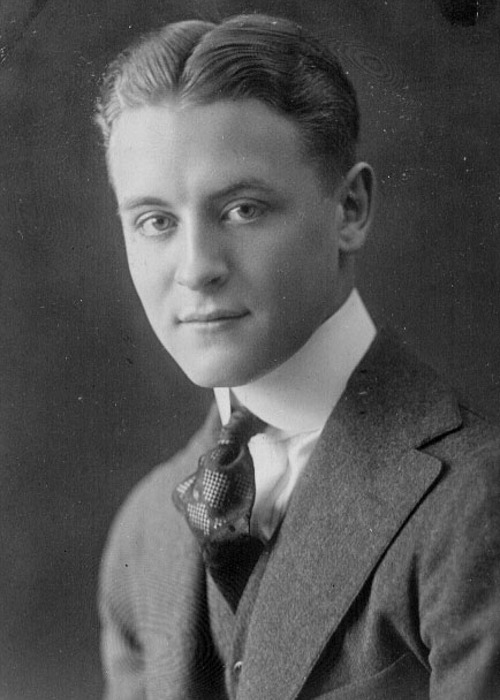
F is for F. Scott
Fitzgerald. Here are four fascinating facts about Fitzgerald: 1. Before he
was a novelist, he was an ad man. In My
Lost City, he later wrote, “I was a
failure—mediocre at advertising work and unable to get started as a writer.” 2.
Other titles that Fitzgerald considered before settling on The Great Gatsby included Incident
at West Egg, The High-Bouncing Lover, Among the Ash Heaps and Millionaires, and
Gold-Hatted Gatsby. 3. The original screenplay for the film adaptation of
that classic was written by Truman Capote. It was rejected. Francis Ford
Coppola then finished his own draft in three weeks. 4. Fitzgerald’s advance for
The Great Gatsby was $3,939. He made
$16,666 off the movie rights.
G is for G. Gordon
Liddy, who spent nearly 52 months in prison after being revealed as the
chief operative for the White House Plumbers unit during the Nixon Administration
and man behind the burglaries of the Democratic National Committee headquarters
in the Watergate building in 1972. Eight years later, he published an
autobiography titled Will, which sold
more than (ugh) one million copies and was made into a TV movie. In the book,
Liddy claims that he once made plans to kill investigative journalist Jack
Anderson—only because he heard someone in the White House say, “We need to get
rid of this Anderson guy,” and he interpreted it literally.
H is for H.G. Wells.
On the one hand, Herbert George Wells was a prolific writer well beyond the
science fiction genre, dabbling in everything from history and politics to
contemporary novels and textbooks. Yes, he wrote The War of the Worlds, The
Time Machine, and The Invisible Man.
But he also wrote titles like The Outline
of History. On the other hand… he once married his cousin, a union that
lasted four years until he left her for one of his students, whom he married,
though he later fathered two children with two other women. So either way, he was more than just the father of
science fiction.
I is for I, Claudius, the 1934 novel by Robert Graves, which has one of the
quirkiest and most memorable openings in literature: I, Tiberius Claudius Drusus Nero Germanicus This-that-and-the-other
(for I shall not trouble you yet with all my titles) was was once, and not so
long ago either, known to my friends and relatives and associates as “Claudius
the Idiot,” or “That Claudius,” or “Claudius the Stammerer,” or
“Clau-Clau-Claudius” or at best as “Poor Uncle Claudius,” am now about to write
this strange history of my life; starting with my earliest childhood and
continuing year by year until I reach the fateful point of change where, some
eight years ago, at the age of fifty-one, I suddenly found myself caught in
what I may call the “golden predicament” from which I have never since become
disentangled.
J is for J.R.R.
Tolkien—that’s John Ronald Reuel. At the age of 16, he met Edith Mary
Bratt, and they fell in love. But Tolkien’s guardian (a strict Catholic who had
raised him after Tolkien’s mother died) forbade him from even corresponding
with the Protestant girl until he was 21. He reluctantly complied until his 21st
birthday, on which he wrote to her, declaring his love. She thought he had
forgotten her and told him that she had agreed to marry another man. But they
met beneath a railway duct and renewed their love (Edith returned her
engagement ring). They were married for nearly six decades until Edith died in
1971. Tolkien’s classic The Silmarillion
tells the tale of Luthien, the most beautiful of all the Children of Illuvatar,
who forsook her immortality for her love of the mortal warrior Beren. When
Tolkien died 21 months after his beloved wife, he was buried in the same grave
as Edith. On the tombstone are the words Beren
and Luthien.
K is for Knifeball, the name of a book by Jory John and Avery
Monsen—“an alphabet of TERRIBLE advice.” Poems and adorable illustrations
suggesting awful decision-making.
A is for Apple. Eat one ever day.
And
then wash it down with your mom’s cabernet.
B
is for blender. Your daddy won’t mind
if
you drop in his Rolex and set it to grind.
C
is for cop with a big shiny gun.
Sneak
up and tickle him. That’ll be fun.
It only gets worse (better really) from there… F is for
setting Daddy’s wallet on fire (and then REALLY hearing F-words), O is for
opening things with your teeth, and R is for raccoon (but definitely not
rabies). Previously, the authors wrote the even more successful picture book All My Friends Are Dead.
L is for Louis
L’Amour. At the time of his death in 1988, more than 100 of his books were
still in print. A complete collection of his works can be found at the Louis
L’Amour Writer’s Shack, which is tucked into the end of a re-created prairie
town called Frontier Village in Jamestown, North Dakota. That village is
surrounded by a herd of bison and the National Buffalo Museum, as well as the
World’s Largest Buffalo—a sculpture 26 feet tall, 46 feet long, built in 1959
out of 60 tons of concrete.
M is for M. Night
Shyamalan, the Indian-American screenwriter and film director of
supernatural successes like The Sixth
Sense, Signs, and The Village. Shyamalan
(the M is for Manoj) grew up a Steven Spielberg fan, and by the time he was 17
he had used his Super-8 camera to produce 45 homemade movies. In 2004, the
Sci-Fi Channel produced a “documentary” special called “The Buried Secret of M.
Night Shyamalan,” in which it claimed that the writer-director had once been
dead for nearly a half-hour while drowned in a frozen pond following a
childhood accident before being rescued and that he had afterward communicated
with the supernatural. It was all a hoax. Shyamalan was in on it. Sci-Fi’s
parent company, NBC Universal, issued an apology. M is for misstep.
N is for Stephen
King’s “N”. N is for novella (it appeared in his 2008 collection Just After Sunset). N is for two
narratives—one about a psychiatrist treating a patient known only as “N” and
the other following the psychiatrist’s sister exploring why her brother
committed suicide. N is for neurotic (“N” suffers from OCD and paranoid
delusions). N is for numbers. The patient is convinced that people who see
seven stones in a nearby field instead of eight may allow a monster to break
through into their reality. In fact any odd numbers are bad, especially prime
ones. Finally, N is for a newspaper clipping revealing that (spoiler alert)
after “N” kills himself and his psychiatrist follows suit, so does the shrink’s
sister.
O is for O. Henry.
His real name: William Sydney Porter. Actually it was William Sidney Porter, but for some reason he
changed the spelling of his middle name when he was in his thirties. More
quirky facts: He once started a satirical weekly called The Rolling Stone. For years, he gathered ideas for his columns and
stories by loitering in hotel lobbies and observing people there. In 1896, he
was arrested for embezzlement from a
bank and fled to Honduras. He later spent three years in prison, publishing 14
stories under pseudonyms while under lock and key. One of the pseudonyms was
“O. Henry,” which first appeared over the story “Whistling Dick’s Christmas
Stocking.” He once mentioned that the “O” stood for “Olivier.” A heavy drinker,
he died in 1910 of cirrhosis of the liver. There are elementary schools named
for this alcoholic-embezzler-writer in North Carolina and Texas.
P is for P.G.
Wodehouse. During a career that lasted more than seven decades (until his
death in 1975 at the age of 93), English humorist Sir Pelham Grenville
Wodehouse produced a diverse body of work—poems, plays, novels, short stories
and song lyrics. His fans and supporters have included the likes of George
Orwell, John Le Carre and J.K. Rowling. But he had his critics, including A.A.
Milne (see above) of Winnie the Pooh
fame. Wodehouse responded by wiring a short story parody called Rodney Has a
Relapse, which included an absurd character named Timothy Bobbin. Another
critic, playwright Sean O’Casey, called Wodehouse “English Literature’s
performing flea.” When Wodehouse produced a collection of letters to a friend,
he gave it the title Performing Flea.
Q is for Q from
the James Bond films, who is obliquely referenced by never actually appears in
any of the Ian Fleming novels. Short for “Quartermaster,” it is actually a title,
not a name, as he (or she) serves as head of the fictional research and
development division of the British Secret Service. Among the best gadgets that
Q has provided for Bond over the years: a wrist-mounted dart gun in Moonraker, a hydroboat fitted with a jet
engine in The World is Not Enough, a
stun gun/car remote control/fingerprint reading cell phone in Tomorrow Never Dies, a Lotus Esprit that
could transform into a submarine in The
Spy Who Loved Me, and an Aston Martin outfitted with a cloaking device in Die Another Day.
R is for R. In The World is Not Enough, Bond fans were
introduced to an assistant to Q, played by the irrepressible John Cleese, who
initially portrayed him as somewhat awkward and clumsy. Bond asked the elder Q,
“If you’re Q, does that make him R?” And that’s how Cleese was credited in the
film. After R proved himself via cool gadgets and cool-enough professionalism,
Bond began referring to him as Q.
S is for “S,”
published in 2013. Here’s The New
Yorker’s Joshua Rothman’s take on it: “S,” the
new mystery novel by J. J. Abrams and Doug Dorst, may be the best-looking book
I’ve ever seen. From the outside, it looks like an old library book, called
“Ship of Theseus” and published, in 1949, by V. M. Straka (a fictitious
author). Open it up, though, and you see that the real story unfolds in
Straka’s margins, where two readers, Eric and Jen, have left notes for each
other. Between the pages, they’ve slipped postcards, photographs, newspaper
clippings, letters—even a hand-drawn map written on a napkin from a coffee
shop. To solve the book’s central mystery—who is V. M. Straka, really, and what
does he have to do with Eric’s sinister dissertation advisor?—you have to read
not just “Ship of Theseus,” but all of Jen and Eric’s handwritten notes. The
book is so perfectly realized that it’s easy to fall under its spell. The other
morning, I was so engrossed in a letter from Jen that I missed my subway stop.”
T is for Mr. T (born Laurence
Tureaud), who wrote the colon-happy book Mr.
T: The Man With the Gold: An Autobiography. Consider this commentary—how
tongue-in-cheek, it’s difficult to say—by an Amazon.com reviewer known as
2nearsighted: “I have been a huge Mr. T fan ever since the A Team, and I
have continued to follow his career ever since. His book not only is a surprise
in terms of its literary merit, but it's an inspiration. Mr. T came from
nothing, to turn himself into one of the finest American actors, and a beloved
personality. My only lament is that the book is not more widely read, because,
as an autobiography, it ranks with THEY CALL ME ASSASSIN by Jack Tatum, ME by
Katherine Hepburn, and Kareem Abdul Jabbar's GIANT STEPS. In fact, it's better.
Mr. T has a better sense of rhythm to his language; he's more psychologically
insightful; and he has a voice as strong as any in modern fiction—like a cross
between Bellow's Augie March and Joe Frazier. I have read the book several
times, and I recommend it to anyone who likes a true story, well told.”
U is for U2 by U2, the definitive, official
history (published in 2009) of one of the most famous bands in the history of
rock and roll, compiled from interviews given by the four band members. The
band’s origins were in Dublin in 1976. A 14-year-old drummer named Larry
Mullen, Jr. posted a note on his high school bulletin board seeking musicians
for a new band. The quintet that eventually formed called itself “Feedback.” It
included Mullen, bass player Adam Clayton, guitarist Dave Evans (later
nicknamed “The Edge”), and vocalist Paul Hewson (later nicknamed “Bono Vox” and
eventually simply “Bono”). The fifth band member? That was Dave’s brother,
Dick, also a guitarist. But early on, he left Feedback to join another Dublin
band. Ever heard of the Virgin Prunes?
V is for V: The Original Miniseries, a
two-part sci-fi event which aired in 1983. Written and directed by Kenneth
Johnson. It launched a franchise about “The Visitors”—about deceptively
friendly aliens trying to gain control of Earth. But everything is derivative.
The film versions of the story have been said to resemble everything from a
stage play (“The Private Life of the Master Race” by Bertolt Brecht), a short
story (“To Serve Man” by Damon Knight, and a novel by Arthur C. Clark called Childhood’s End.
W is for W is for Wasted, the latest
installment of mystery master Sue Grafton’s alphabet series. Here’s Grafton’s
version of the first 22 letters of the alphabet: Alibi, Burglar, Corpse, Deadbeat,
Evidence, Fugitive, Gumshoe, Homicide, Innocent, Judgment, Killer, Lawless,
Malice, Noose, Outlaw, Peril, Quarry, Ricochet, Silence, Trespass, Undertow,
Vengeance.
X is for The Joy of X: A Guided Tour of Math from One to Infinity. Author Steven Strogatz,
expanding on his popular series for The
New York Times, has been described as “the math teacher you wish you had.”
He explains some of math’s oft-imposing ideas clearly and wittily in areas from
law and medicine and business to philosophy, pop culture and art. Booklist described it as “a high-spirited romp through complex
numbers, standard deviations, infinite sums, differential equations, and other
mathematical playgrounds.” Among the subjects
he expounds upon: how Google searches the internet, how to determine how many
people you should date before setting down, and how often you should
flip your mattress.
Y is for The End of Mr. Y, written by
Scarlett Thomas and published in 2006. It is a book about a book of the same name that no one alive has read—until Ariel Manto does
so. This is how the publisher described it: “Seeking answers, Ariel follows in Mr. Y’s
footsteps: She swallows a tincture, stares into a black dot, and is transported
into the Troposphere—a wonderland where she can travel through time and space
using the thoughts of others. There she begins to understand all the mysteries
surrounding the book, herself, and the universe. Or is it all just a
hallucination?”
Z is for Z is for Zzz… Part of the
“Mysterious You” children’s picture book series, its subtitle is: “The Most
Interesting Book You’ll Ever Read About Sleep.” The author, Trudee Romanek,
discusses everything from yawning to nightmares to sleepwalking to hibernation.
And these three factoids: 1. Mozart was inspired by music he heard in his
dreams, 2. Gorillas who have learned sign language have been known to sign in
their sleep, and 3. If a person lives to be 70, they will have spent 23 years
of their life sleeping.
Subscribe to:
Posts (Atom)