Pages

Wednesday, May 28, 2014

10 PATHS TO A GOOD IDEA


In 2014, I was invited give a TED talk—at TEDxMonterey to a room full of folks eager to hear about the latest insights, eye-opening innovations, impressive pursuits. I was joined on the list of presenters by a NASA space scientist who has discovered hundreds of distant planets, a charismatic marine biologist from Sri Lanka who studies humpback whales, a Naval captain who focuses on systemic strategy and complexity, a developmental psychologist, a tech innovator… All I do is tell stories. What the hell was I supposed to talk about?

So I told stories. More accurately, I told them how I FIND stories.

For me, the idea is always paramount. I’m often asked about the writing process, but that ignores the first step: What are you going to write about? Good writing begins before the first line is ever written. It all starts with subject matter that captures readers' attention, a story or angle that is simply too clever for an editor or publisher to pass up, something that just might make a student actually enthusiastic about writing.

I’m a bit of a literary jack of all trades, mostly because I enjoy experimenting, challenging myself. I’ve written more than 30 books for kids and adults, newspaper articles, magazine features, poems, movie screenplays, blogs, you name it. It keeps me fresh as a writer, if rather exhausted and often humbled. I tend to pursue whatever piques my interest—a broad range of subjects that includes just about anything (from sports car racing to civil rights) and anyone (from Dr. Seuss to Dr. Joyce Brothers). But each started as merely the germ of a notion.

My hope is that by learning about how these stories came to me over the years, it might offer some insight into the spectrum of creative possibilities. So here I offer 10 paths to a good idea:

Thursday, May 22, 2014

29 EVOCATIVE DESCRIPTIONS OF AMERICAN PLACES


Often when I stand up in front of audiences and discuss my trilogy of American travel memoirs, some curious soul in the crowd asks me about my process. Do I write while I’m in the road? (Not usually.) Do I tell people exactly what I’m doing when I sit down to extract their story? (Always.) Do I conduct preliminary research on the places I’ll be going and the concepts I’ll be mining? (Gobs of it.)

I tell them that I bring along a digital recorder, not only for the interviews, but for my own commentary as I’m strolling through a small-town or rumbling along a ribbon of highway beneath an endless sky. And I always marvel at the fact that some of my favorite passages from my books are nearly word for word what I spoke into my recorder—because I’m in the moment, and the words come out with a lyrical quality inspired by a flash of epiphany. A dollop of description will often finds its way from my mouth to the pages virtually verbatim.

Friday, May 16, 2014

51 AUTHOR PORTRAITS DRAWN BY ZAK PULLEN

Award-winning illustrator Zak Pullen contributed the gorgeous illustrations that made an art piece out of the first picture book from Why Not Books -- Francis and Eddie, which tells the tale of the stunning triumph of 20-year-old amateur golfer Francis Ouimet (and his 10-year-old caddie) at the 1913 U.S. Open. We consider it an unprecedented contribution to the world of children's literature about golf --which is appropriate because Pullen loves golf, and he loves literature. The latter is evident in the following: Pullen's 51 portraits of legendary writers -- from Maya Angelou and Edward Abbey to Jack London and James Joyce to Lewis Carroll and Langston Hughes. In this case, their literary contributions are forever priceless, but a picture is worth at least a thousand words. 


Saturday, May 10, 2014

46 SHORT AND SWEET SHEL SILVERSTEIN POEMS


You can love Shel Silverstein because he was a Renaissance Man, yet a Captain of the Unpretentious—singer-songwriter, screenwriter, playwright, cartoonist, iconic children’s author. You can love him because of his range. He wrote iconic songs like “A Boy Named Sue” (he won a 1970 Grammy) and iconic books like The Giving Tree. He created illustrated travel journals for Playboy about everything from a baseball training camp to a nudist colony, from Haight-Ashbury to Fire Island, from Spain to Switzerland (“I’ll give them 15 more minutes, and if nobody yodels, I’m going back to the hotel.”)

You can love him because he said things like this: "When I was a kid… I would much rather have been a good baseball player or a hit with the girls, but I couldn't play ball. I couldn't dance. Luckily, the girls didn't want me. Not much I could do about that. So I started to draw and to write… By the time I got to where I was attracting girls, I was already into work, and it was more important to me. Not that I wouldn't rather make love, but the work has become a habit."

You can love him because he called himself Uncle Shelby, even those his real name was Sheldon. You can love him because he was a survivor. He was a Korean War veteran who espoused peace. He was a poet who made children smile around the world—with illustrated poetry collections like Where the Sidewalk Ends, A Light in the Attic, Falling Up, and Every Thing On It—even though he himself lost a daughter to a cerebral aneurysm when she was 11.

It may be that only Dr. Seuss combined whimsy and profundity—imagination and insight—as deftly as Silverstein did. And Silverstein could do it in only a few lines. So we at the Why Not 100 have chosen our 46 favorite Shel Silverstein mini-masterpieces, starting with the perfect one:

1. INVITATION (Where the Sidewalk Ends)

If you are a dreamer, come in,
If you are a dreamer, a wisher, a liar,
A hope-er, a pray-er, a magic bean buyer…
If you’re a pretender, come sit by my fire
For we have some flax-golden tales to spin.
Come in!
Come in!

Saturday, May 3, 2014

69 AWESOME AND AWFUL AUTOBIOGRAPHY TITLES


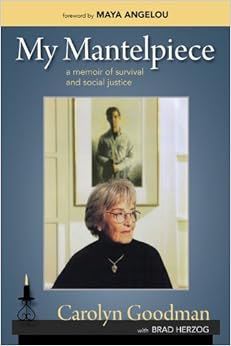
When we at Why Not Books were considering titles for the memoirs of the late Carolyn Goodman, mother of slain civil rights worker Andrew Goodman and a civil rights icon herself, we harkened back to a particular story she told:

When my youngest son David was seven years old, he came running home from school one day, breathless with excitement. In his hands he held a large piece of construction paper smothered in assorted colors, lines, shapes, and squiggles. In the eyes of a seven-year-old, it was a creation of unmatched brilliance, Monet and Degas and O’Keeffe all rolled into one. In fact, that’s quite literally what it looked like. With the flamboyance only a true artist can exude, David boomed into our Upper West Side apartment, raised his magnum opus, and proudly declared, “Mom, come here! Look at my mantelpiece!”

 A masterpiece is essentially the product of another’s estimation. Someone else reviews your life’s work and pronounces judgment. But a mantelpiece is a personal statement of values and choices, your life’s work presented as a museum of the self… My life has been a work of art—a wondrous, colorful, tragic, flawed, intimate and epic work of art. This is my story. This is my mantelpiece.

So that’s what it became—MY MANTELPIECE: A Memoir of Survival and Social Justice.

Selecting a title for a well-known person’s autobiography or memoir can be a challenge. For some reason, iIf you’re an unknown with a remarkable story, it seems easier to choose evocative titles like Girl, Interrupted (Susanna Kaysen), The Color of Water (James McBride), or Reading Lolita in Tehran (Azar Nafisi). But when you’re a celebrity of some sort, it can be a bit trickier. And not always successful.

We at the Why Not 100 have ranked 69 of the more interesting choices through the years. Those at the top of the list are wonderful. Those at the bottom are wince-inducing. You be the judge where the line is drawn.

1. Me (Katherine Hepburn)

2. The Memoirs of an Amnesiac (Oscar Levant)

3. Long Walk to Freedom (Nelson Mandela)

4. I Can’t Wait Until Tomorrow, Cause I Get Better Looking Every Day (Joe Namath)

5. Kiss and Make-Up (Gene Simmons)

Sunday, April 27, 2014

21 ICONIC WRITERS’ ACCESSORIES


Writers tend to be creatures of habit. I know that because I’m a writer, and I have some pretty entrenched habits. Writers can also be unconventional. I know that for the same reason. Combine the two—a preference for both the usual and the unusual—and you begin to understand why a good many writers (of song, screen and celebrated literature) are known for somewhat eccentric accessories. Here are 21 of the most iconic:

1. J.R.R. Tolkien’s pipe

Tolkien loved, loved, loved his pipe. Think of the images you’ve seen of the man, and there’s probably a pipe in the picture. Think of the images you’ve seen of his works on the big screen, and there may be a long curvaceous pipe in the picture too (remember Gandalf and Bilbo blowing smoke rings?). Middle-Earth lore talks of “pipe-weed” (also known as halflings’ leaf) being a plant developed by the hobbits of the Shire.  Indeed, The Hobbit and The Lord of the Rings are brimming with pipe-smoking scenes—some rather curious, making one wonder what exactly they’re smoking. Here’s one passage from The Hobbit:

“After some time he felt for his pipe. It was not broken, and that was something. Then he felt for his pouch, and there was some tobacco in it, and that was something more. Then he felt for matches and he could not find any at all, and that shattered his hopes completely.”

2. Mark Twain’s cigars

When Cigar Aficionado magazine decided to list its “Top 100 Cigar Smokers of the Twentieth Century,” several authors made the list, including Rudyard Kipling (#22), W. Somerset Maugham (#61), Ernest Hemingway (#85) and John Grisham (#100). But ol’ Samuel Clemens was #5, behind only Winston Churchill, JFK, Fidel Castro, and George Burns. It was said that he smoked two or three dozen cigars a day. He once wrote an essay about it—“Concerning Tobacco” was the title. But he said, “I have made it a rule never to smoke more than one cigar at a time.”

Tuesday, April 22, 2014

98 WORDS INVENTED BY SHAKESPEARE


April 23 marks a remarkable day in literary history—the day William Shakespeare may have been born (in 1564) and the day he certainly died (in 1616). There is a word for that—coincidence. For all we know, Shakespeare might have coined it.

It is difficult to know which words were created by Shakespeare and which were simply history’s first attestations of such words. Fame makes one’s contributions seem pioneering, even if they were less than so. Kind of like how some people believe Dorothy Hamill invented her haircut. (I’m well aware that there is a generation of readers who has no idea that what means). But we at Why Not Books—and one of us survived the Seventies with that very haircut—have a love of language. And we are in awe of William Shakespeare, even if some of the words he invented didn’t catch on.

Orgulous? Quatch? Foxship? Wappened? Deracinate? Hey, nobody’s perfect.

Here are 98 of our favorite words—roughly in order of preference—that we may, indeed, owe to the Immortal Bard:

1. Well-read (Henry IV)
2. Published (Henry VI)
3. Moonbeam (A Midsummer Night’s Dream)
4. Bloodstained (Henry IV)
5. Arch-villain (Measure for Measure)
6. Hot-blooded (The Merry Wives of Windsor)
7. Eyeball (The Tempest)
8. Flowery (A Midsummer Night’s Dream)
9. Gallantry (Troilus and Cressida)
10. Hobnob (Twelfth Night)